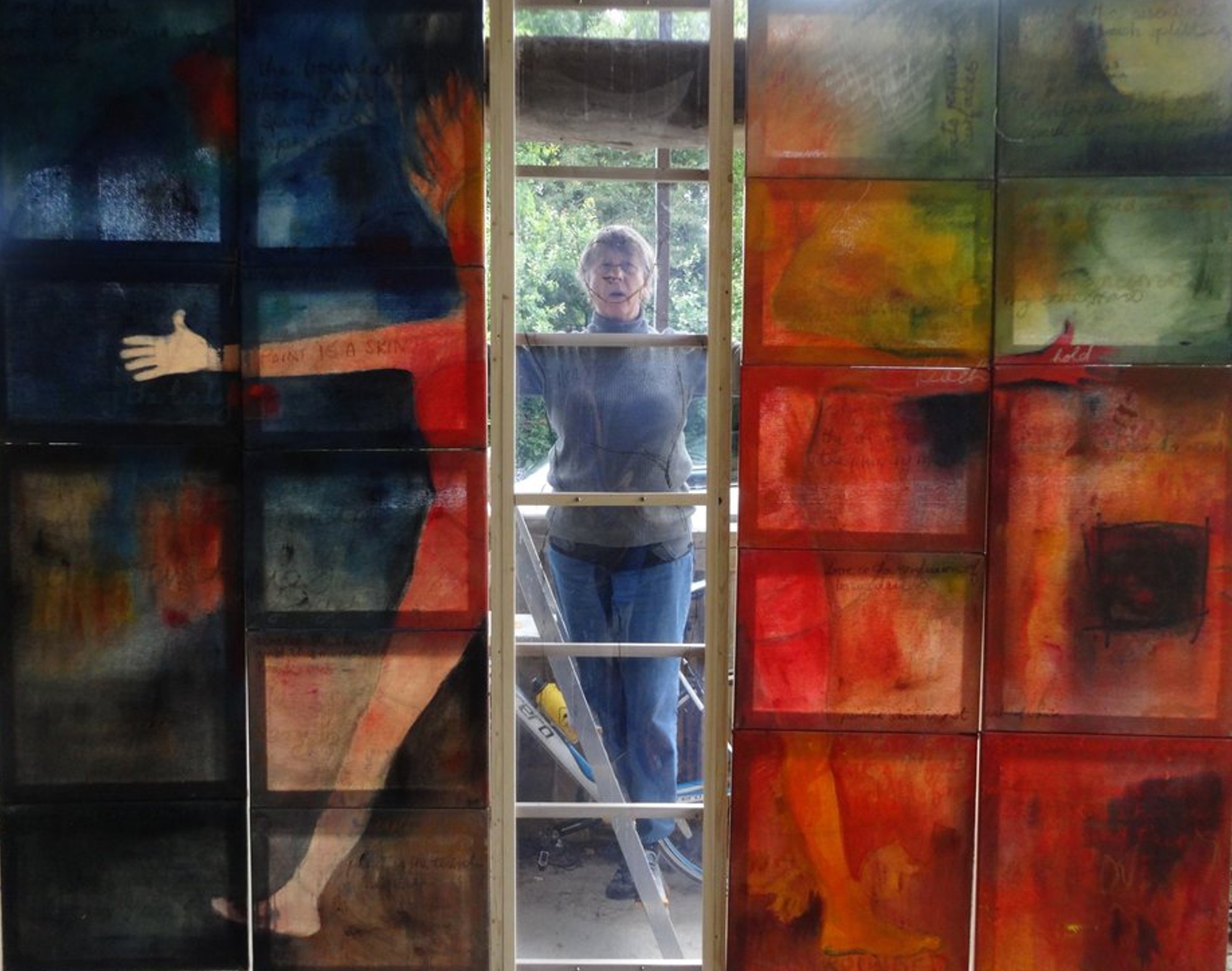
Where am I now and what am I doing?
Born into the British Empire in 1943 during the Second World War, Ruth’s childhood was in colonial Rhodesia. Her art and her writing deal with colonialism, the liberation wars, and post-colonialism. She returned to Africa as an adult to portray some of the contradictions of her youth.
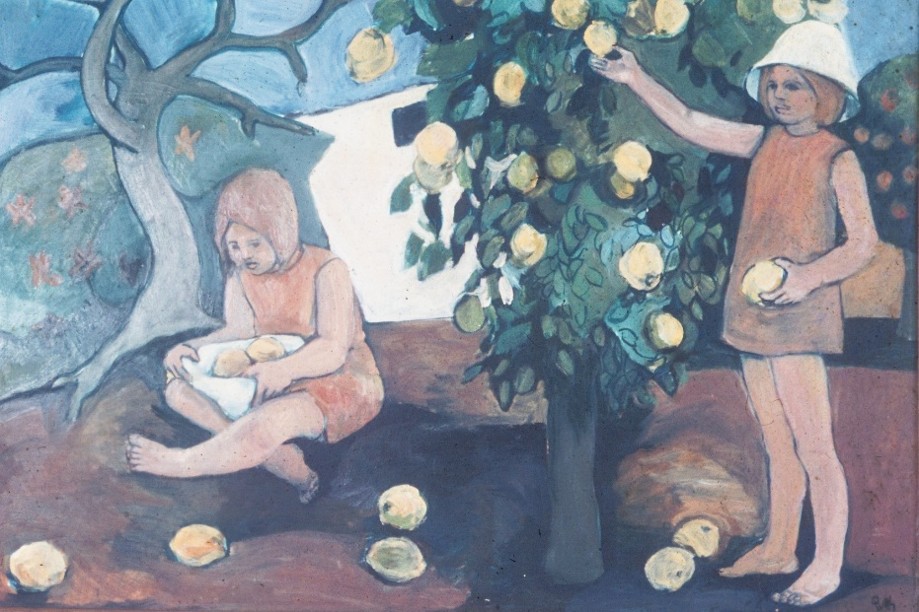
The Imp Tree. The Citrus tree that grew Lemons on low branches and Oranges high up
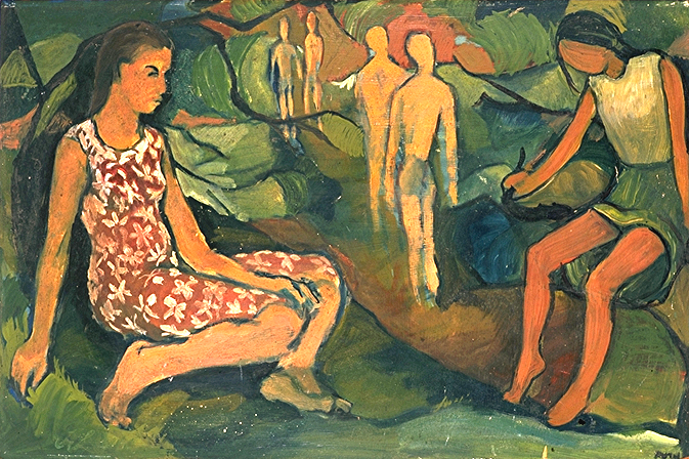
Walking down the Chinyika River with the Thornycroft boys
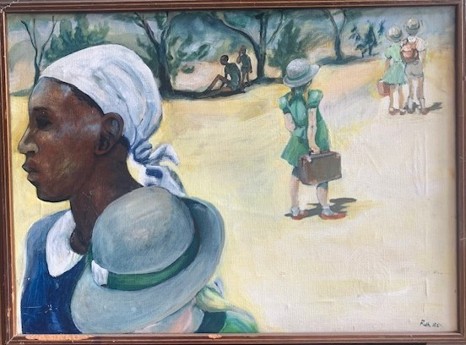
School Days
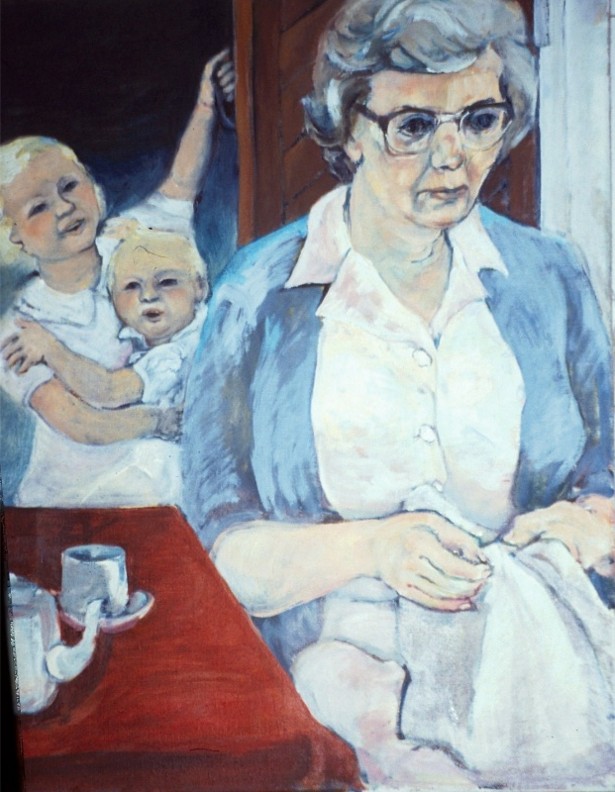
My mother and the lost children
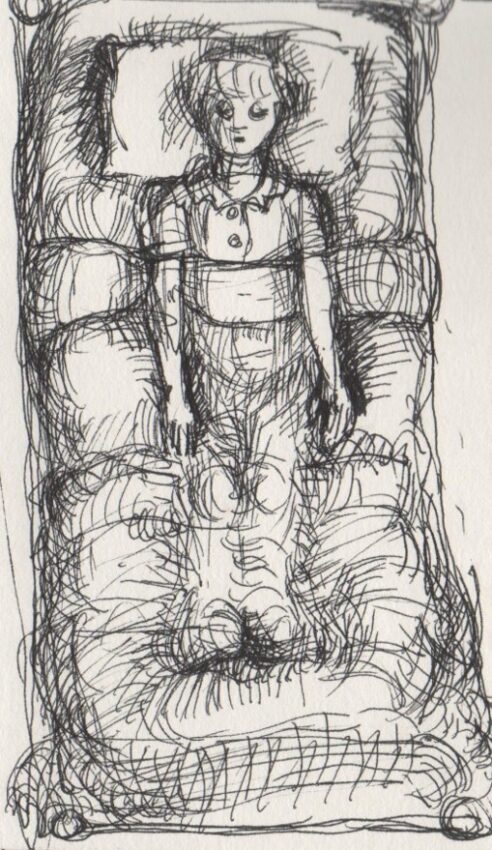
Drawing for a poem called “The Night’s Four Corners”
Schooldays 1949 – 1961
As a young white Rhodesian girl, Ruth had an excellent liberal and progressive education. It was needed in the increasing turmoil of her parents’ divorce and the disruptive politics of the region. She also had a rich cultural life with music, dancing and theatre and went to political lectures by Joshua Nkomo and Alick Nkata. Major influences were Frank McEwen and Thomas Mukarobgwa.
The Michaelis School of Art 1962 – 1964
Ruth left art school lacking confidence in her artistic ability and the value of art in the fight for equality. Apartheid seemed to have won. Following the Sharpeville Massacre, the 1960s saw anti-apartheid activists like Nelson Mandela and Bram Fischer in prison or in exile. It was the end of non-racial Academic Freedom and the start of the enforcement of the Group Areas Act.
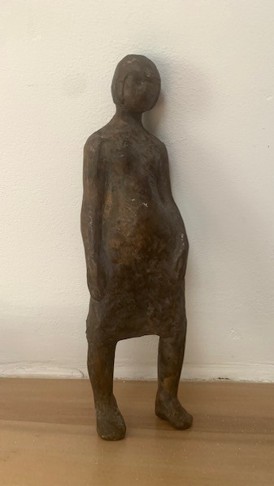
Bronze figure of Noppy (Naomi Dalgleish) using the lost wax technique taught by Richard Wake
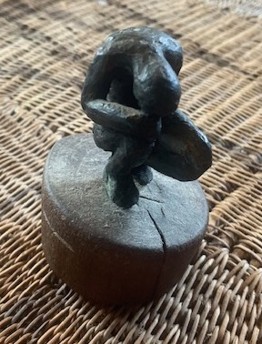
Bronze figure of bowed man made by the lost wax technique taught by Richard Wake
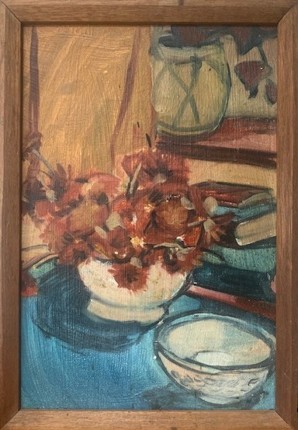
Ruth’s study in her university residence. Oil on board
1965-1966 Two years of apartheid politics in South Africa
Ruth worked in Pietermaritzburg in Natal, South Africa, after art school where she met Alan, a young man who was a member of the Non-European Unity Movement, a largely Indian anti-apartheid political party, and he gave her a Marxist political education, which was a dangerous undertaking in South Africa. Later Ruth moved to Cape Town where she made friends in District Six and Bo Kaap.
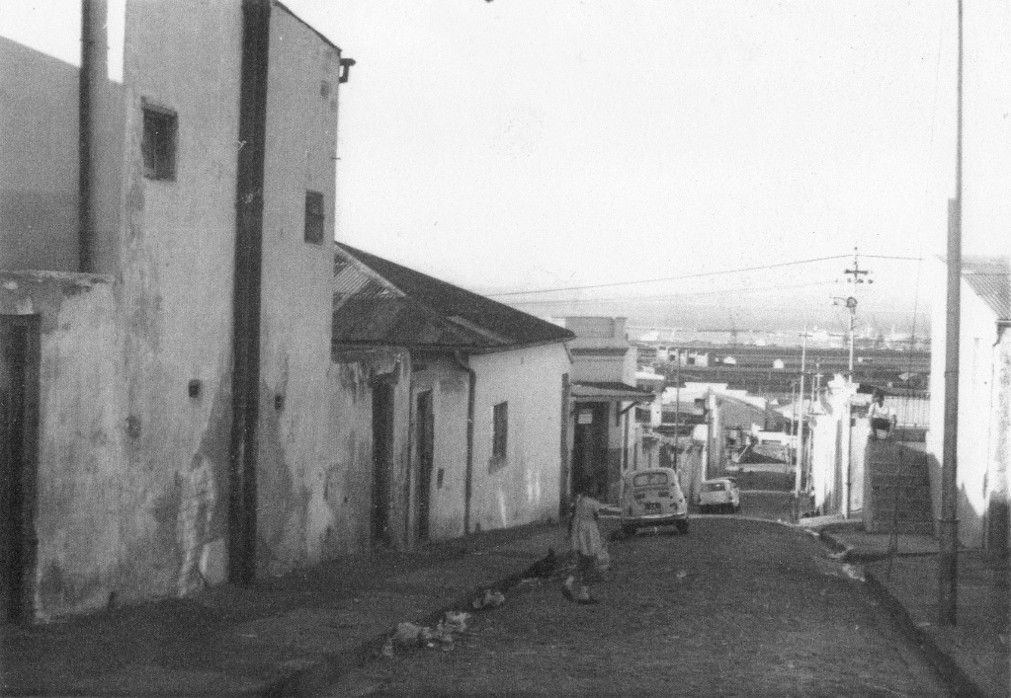
Photo of District Six looking towards Cape Town harbour and Robben Island
During this period, Ruth made no art instead she wrote poetry. From her room in Cape Town above District Six, Ruth could see Robben Island where Nelson Mandela was imprisoned Her poem Robben Island was published in Sechaba, the African National Congress magazine.
ROBBEN ISLAND
Morning soothes the cold sea
with yellow fingers of light
bandaged with mist.
Lost in the limbo of old storms
the gulls cry and float
like ashes from a dying fire.
Bare, still, blue, in the quiet sea,
the island rides serenely.
A flattened pearl in the beautiful oyster-bay.
But its violence tears the sky
to screaming ribbons which descend
in thick horror on the land.
It is a mountain built over the years
of small frustrations, misery, hate,
injustice and starvation.
Its roots are in the hearts of men
and in their bellies
and its darkness shuts their minds
before the night.
Oh, cry out now, you violent stones
for I have heard the sunken thunder,
felt the earth tremble, seen the light in the crater!
Soon it will come – the bursting mountain,
The blood-coloured shouts will blot out the sun,
spill confusion to the horizon and stain the earth.
London 1966 – 1972
Ruth was befriended and helped by Rica Hodgson of Defence and Aid and people in the Africa National Congress, but life was tough and lonely as a single mother.
Marriage to Mike Bush after 1968 brought problems, passions and pleasures. In 1967 Ruth joined the ANC’s Youth Wing and she started studying at the London School of Economics, still determined to make the world a better place. It was the year of the student revolutions and demonstrations against the Vietnam War. In 1969 Ruth and her husband had another child and bought a house.
The Women’s Movement of 1970 was a significant experience for Ruth. She began to make art again and went to inspiring community classes, including an excellent short course on creativity and teaching that proved invaluable in Zambia.
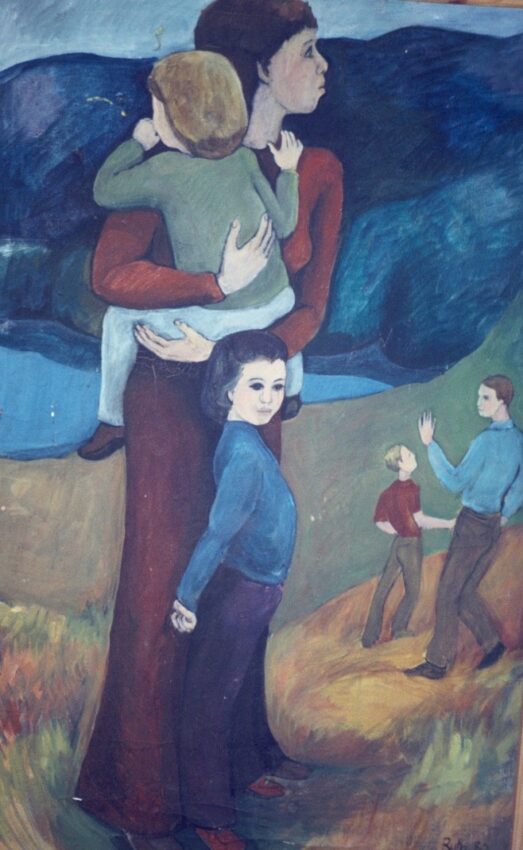
Men and the mountain, mother and the children. Oil on board 1972
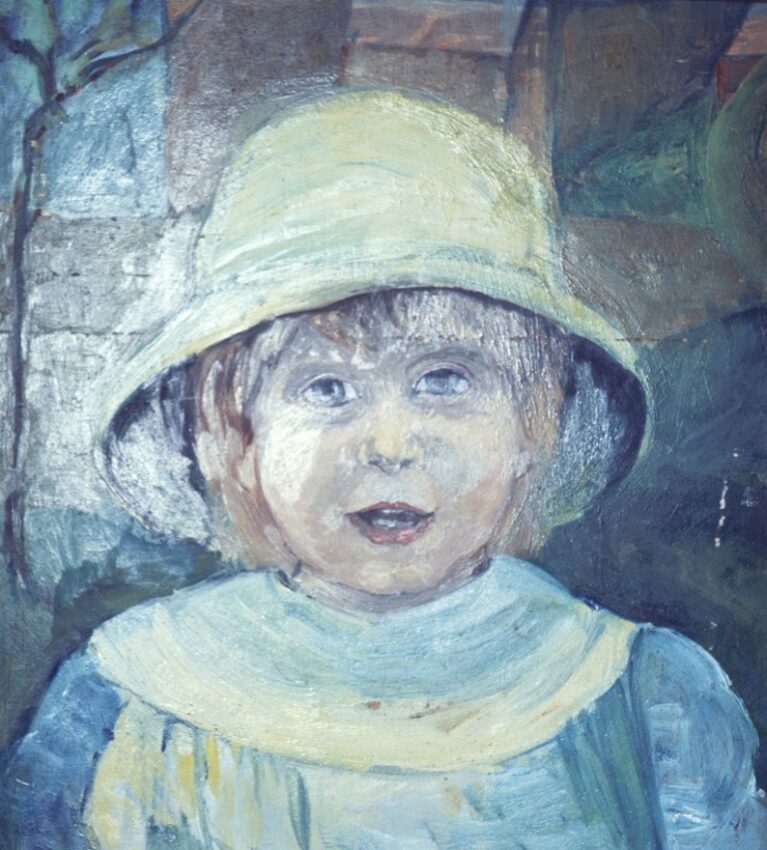
Tanvir aged two. Oil on board
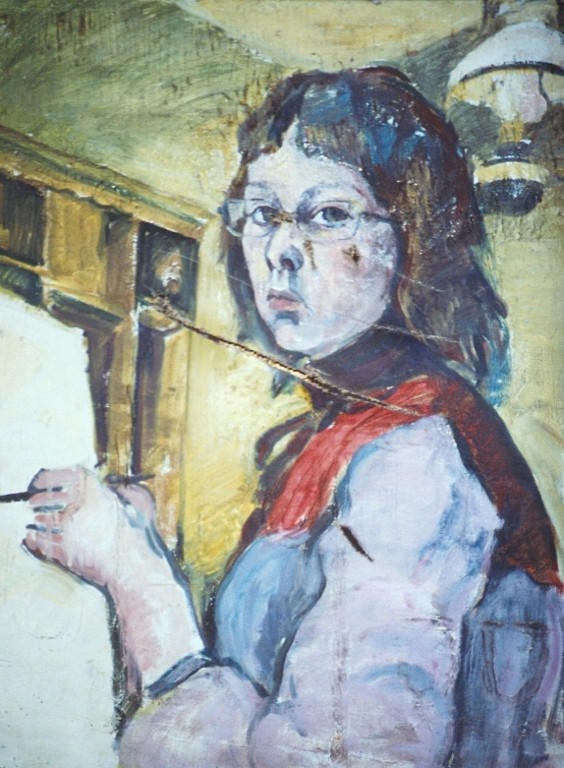
Self-portrait. Oil on canvas. Damaged when forced to stop painting
Zambia 1972 – 1984
Ruth found work and made art again, exhibiting with the Lusaka Art Society. Cynthia Zukas, Joan Pilcher and Bente Lorenz became her friends. Her paintings often had domestic subjects, family portraits and landscape. Time and again however, Ruth returned to political subjects but as she said she did not want to appear didactic and kept searching for the right form for her ideas.
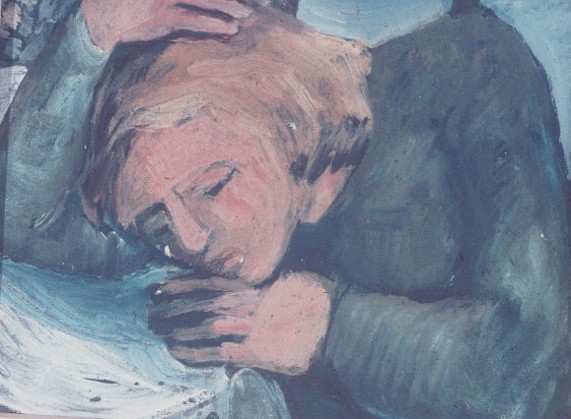
Blue Woman oil on Canvas
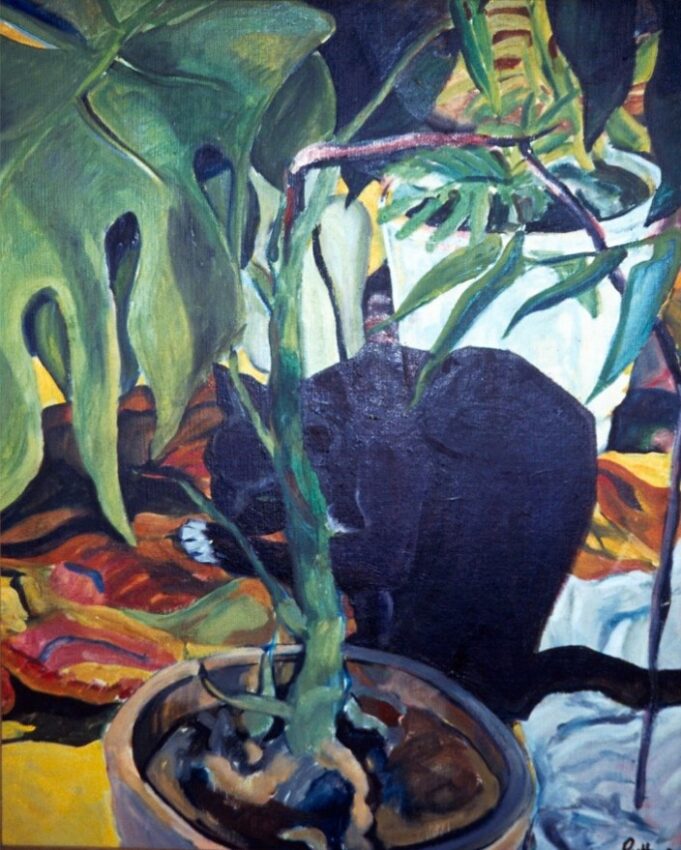
Cat and Dragon plant. Oil on canvas
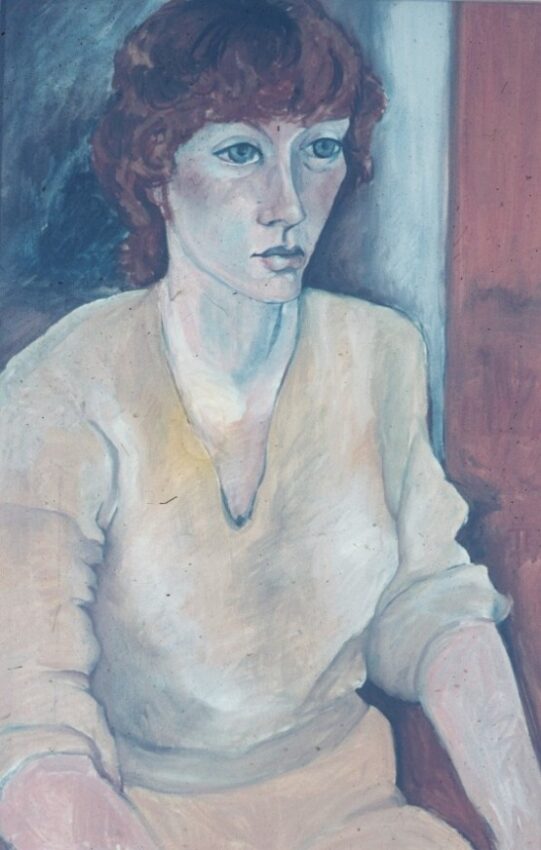
Manja Scott. Oil on Canvas
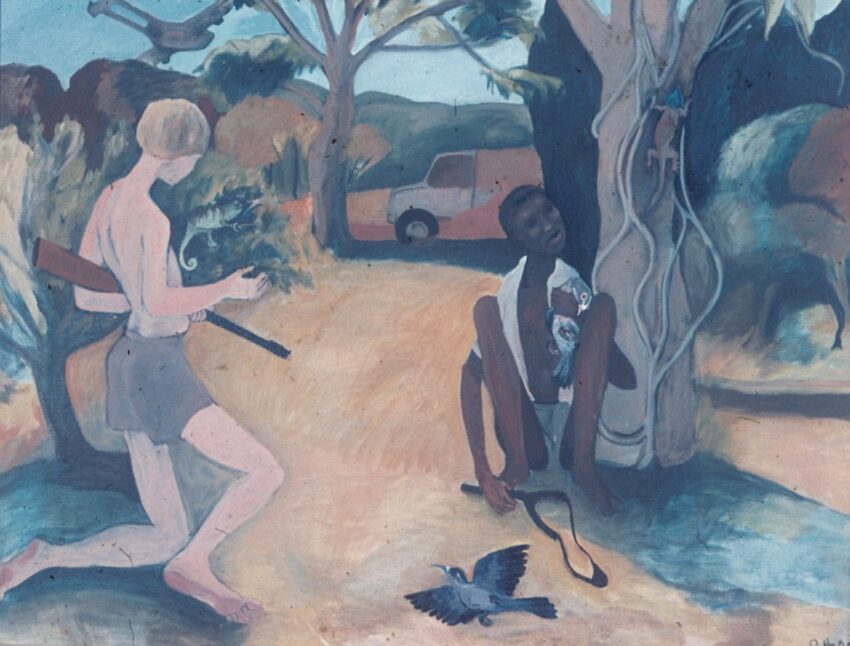
Boys and war games. The Legend of the Chameleon and the Lizard. Oil on canvas
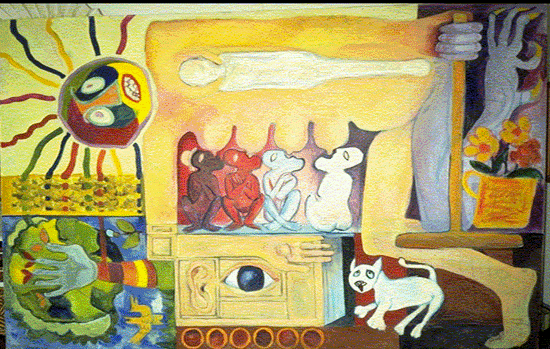
My Home. Large Acrylic Painting on canvas using copies of drawings made by Zoe Bush
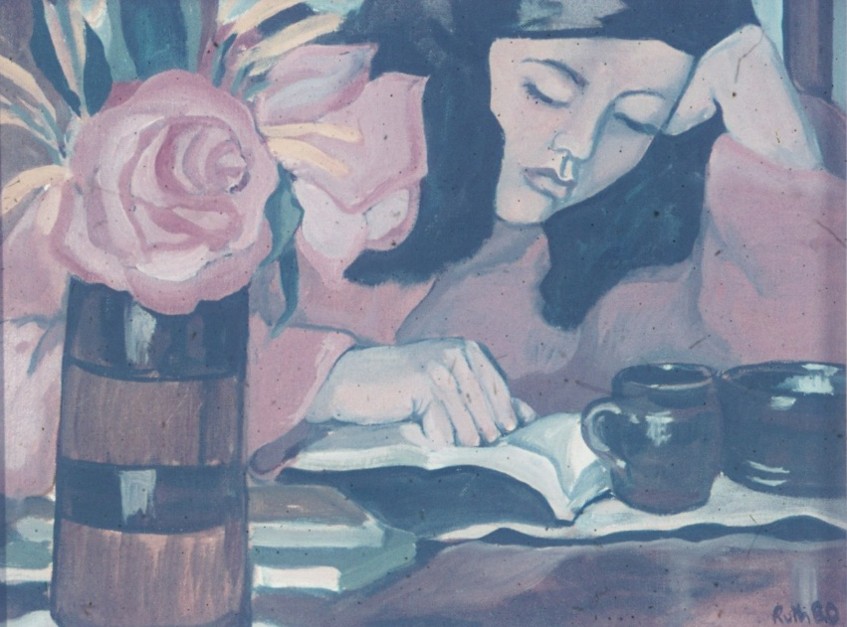
Rachma reading at breakfast. Oil on canvas
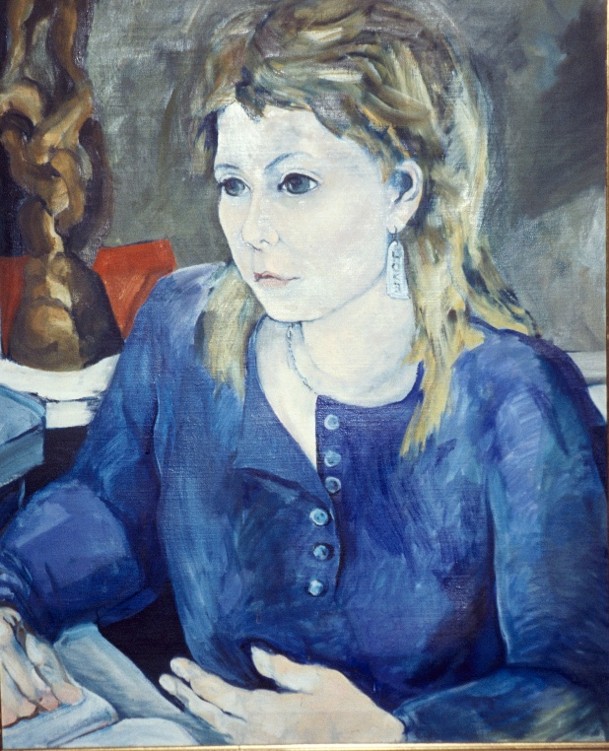
Tanvir. Oil on canvas
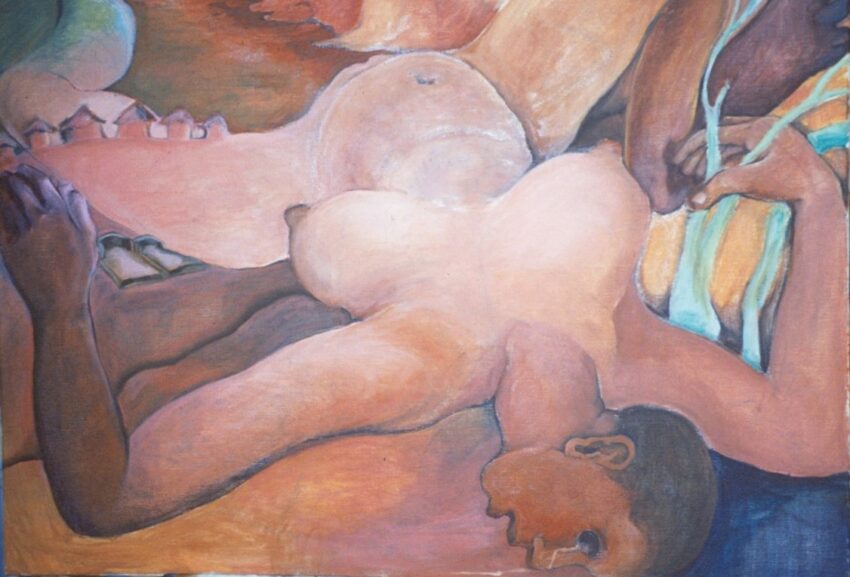
The Rape of Lusitu.” Kulilila – The Weeping”. Oil on canvas
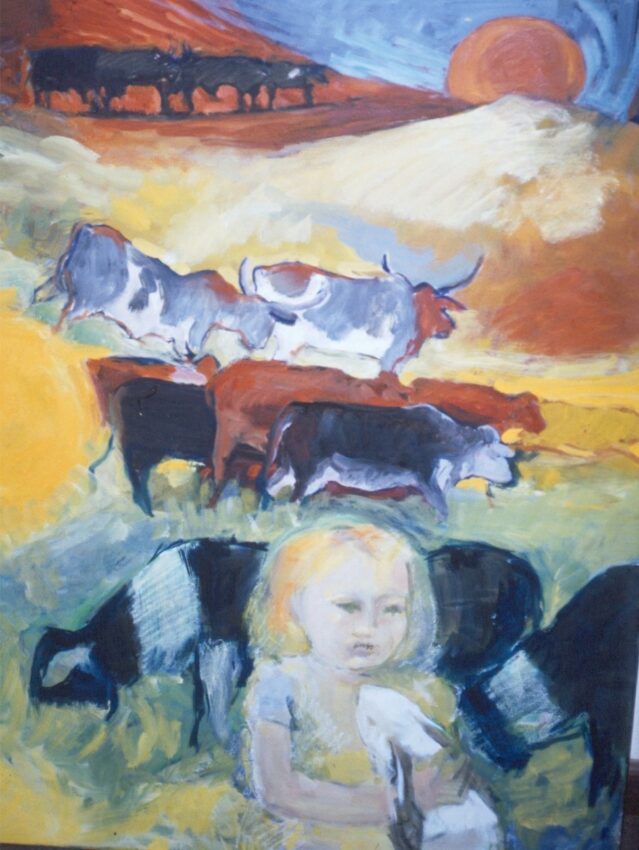
Different sunsets. Oil on canvas. The Lechwe Trust Collection
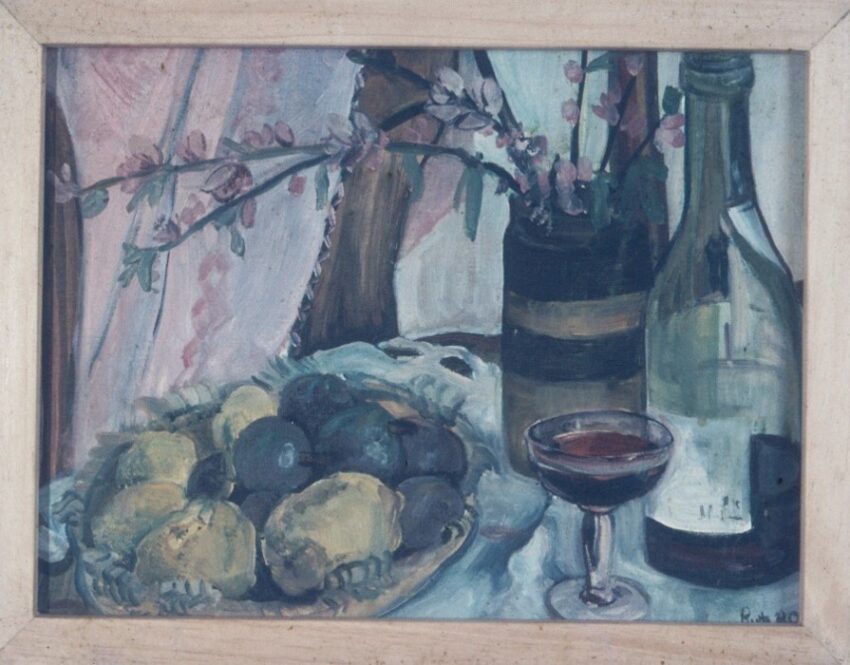
Still life with wine. Oil on canvas.
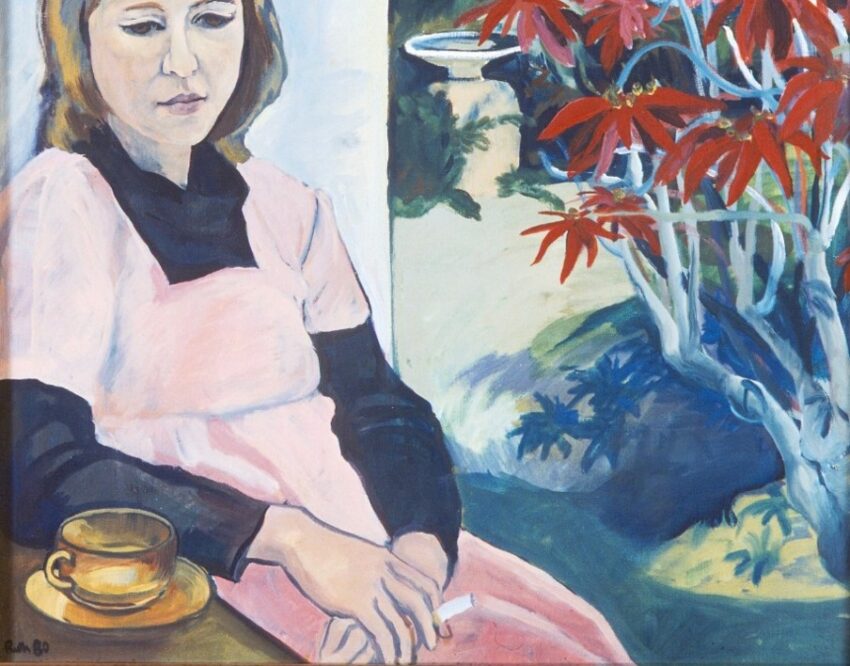
Dorothy Oglethorpe on the veranda. Oil on canvas
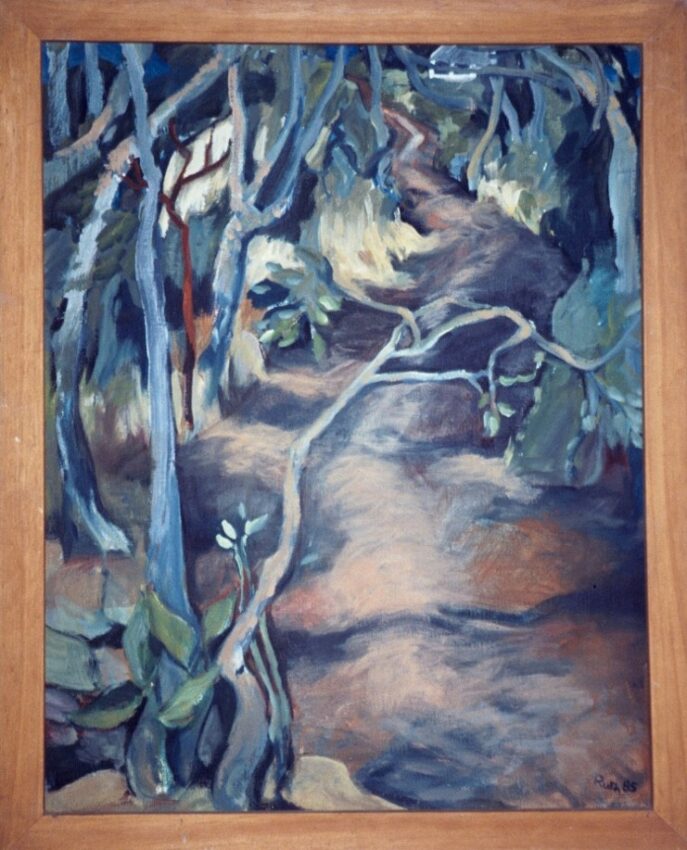
Bush road in Kafue Park. Oil on canvas
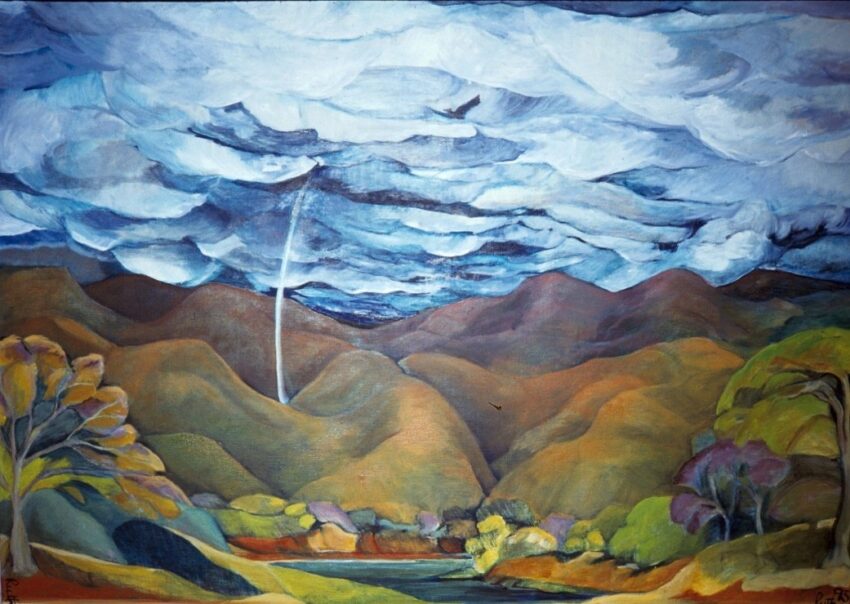
The Chongwe River Oil on canvas
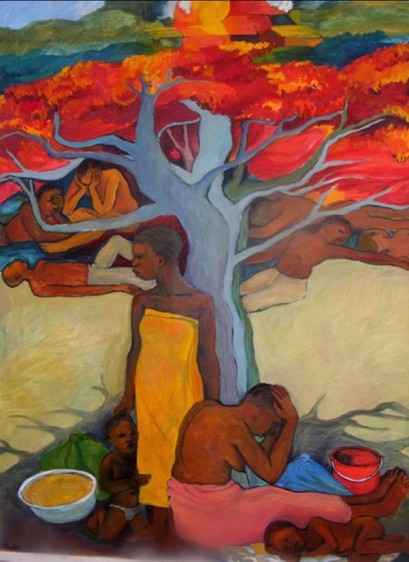
The Bombing of Chikumbi ZAPU Camp by the Rhodesians 1979. Oil on canvas. National Collection of Zambia
In 1980, it was the end of the war and the birth of Zimbabwe. Ruth worked on the film The Grass is Singing and had a successful exhibition at Mpapa Gallery shared with Mr Mwalula, a sculptor from Zaire. Ruth returned to England for a year to do an Art Teacher’s Diploma in 1981.
Mpapa Gallery 1984 – 1994
In 1984 Ruth began to work at Mpapa Gallery at the invitation of Joan Pilcher, together with Cynthia Zukas and Patrick Mweemba. Lutanda Mwamba, Style Kunda, and Baruchi (David Chirwa) who were also artists and part of the Mpapa Gallery team. Ruth says it was without question the most worthwhile and challenging time of her life. She learned from Zambian artists about the drive we all have to make art, as well as the connections between art, music, performance, spirit, and living in the present time.
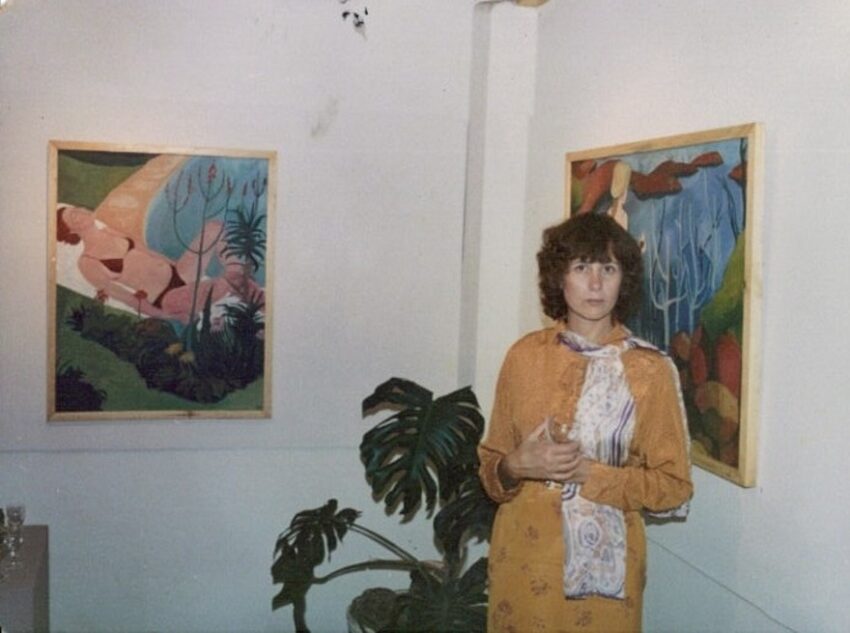
Ruth at her 1980 Mpapa Gallery exhibition.
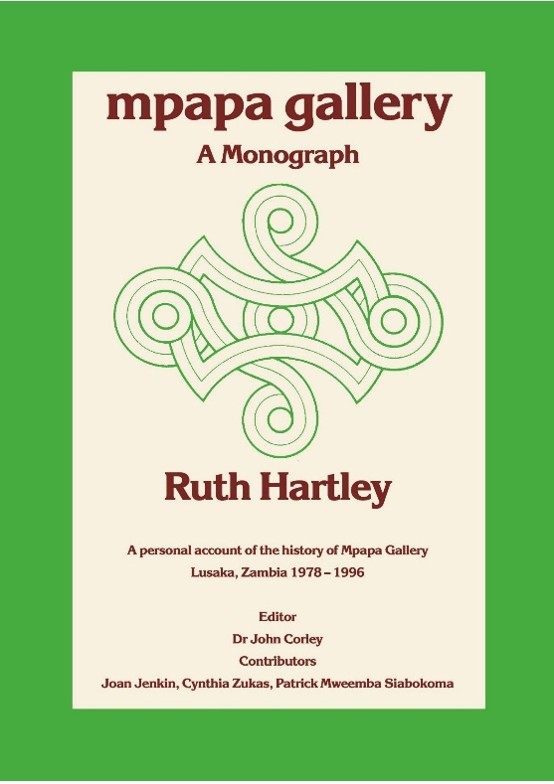
The original Mpapa Gallery was situated on the ground floor of Pilcher Graphics on Cha Cha Cha Road near the Lusaka City main bus terminal
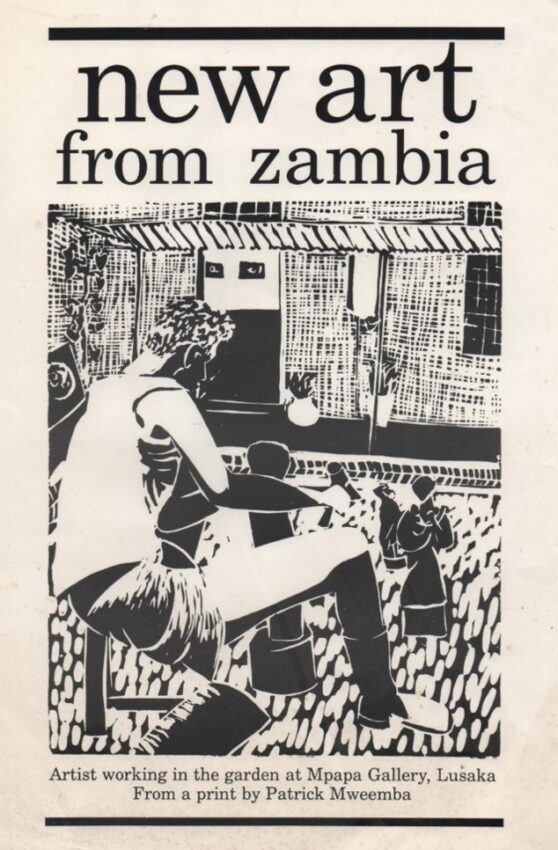
Mpapa Gallery. Woodblock print by Patrick Mweemba
The Third Havana Biennial -Tradition and Contemporaneity 1989
Ruth was honoured to be invited to the Havana Biennial by the Cuban Ambassador, Comrade Blackstock, in Zambia. It was an extraordinary opportunity. Henry Tayali had been invited to the previous Biennial as an exhibiting artist, but she was invited as Director of Mpapa Gallery to give a talk about Zambian art. Stephen Kappata was the Zambian artist whose work was chosen for exhibition. Zambian Cultural Services were unable to fund this visit, but the Lechwe Trust generously paid for Ruth’s air ticket. A copy of her talk and report of the event are both available.
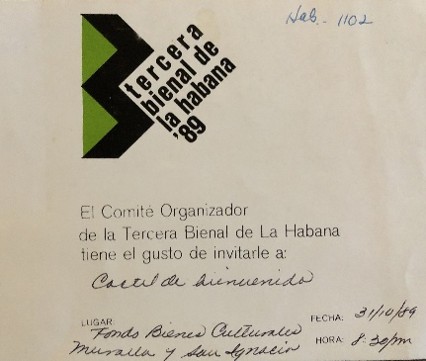
Ruth’s Invitation
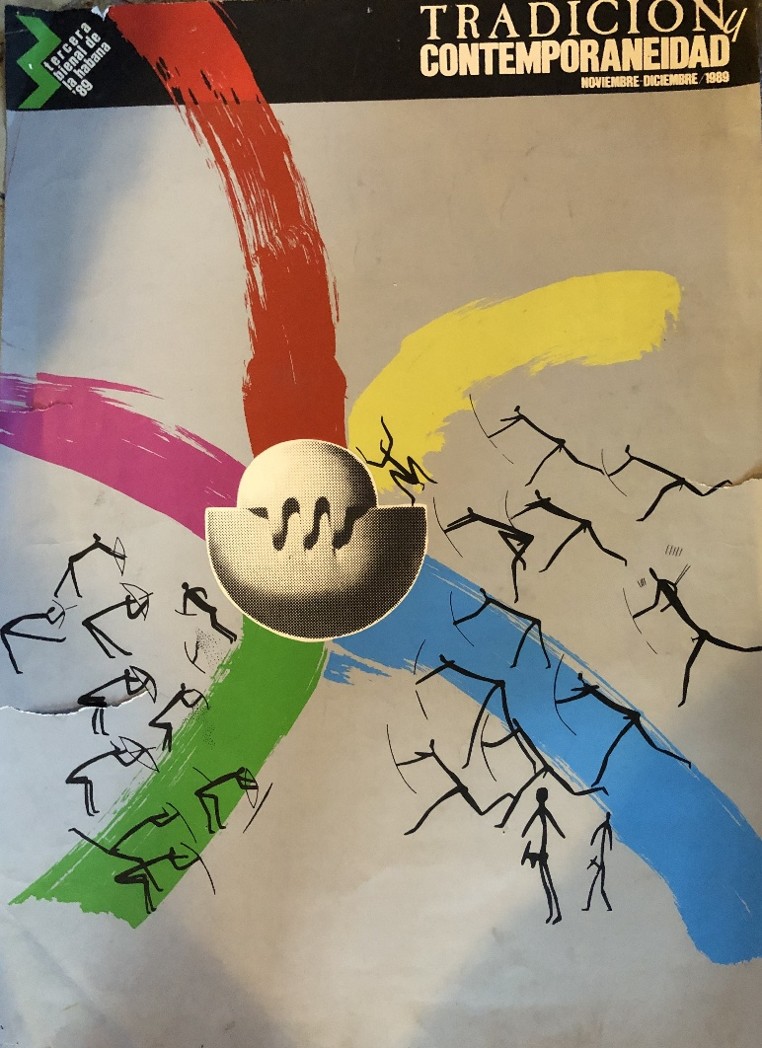
Poster for the Third Havana Biennial. Tradition and Contemporaneity
Ruth went to Mongu in Western Province to visit Stephen Kappata. Here are the photos of his home, his studio and work. She thought it important to show the ways some Zambian artists work.
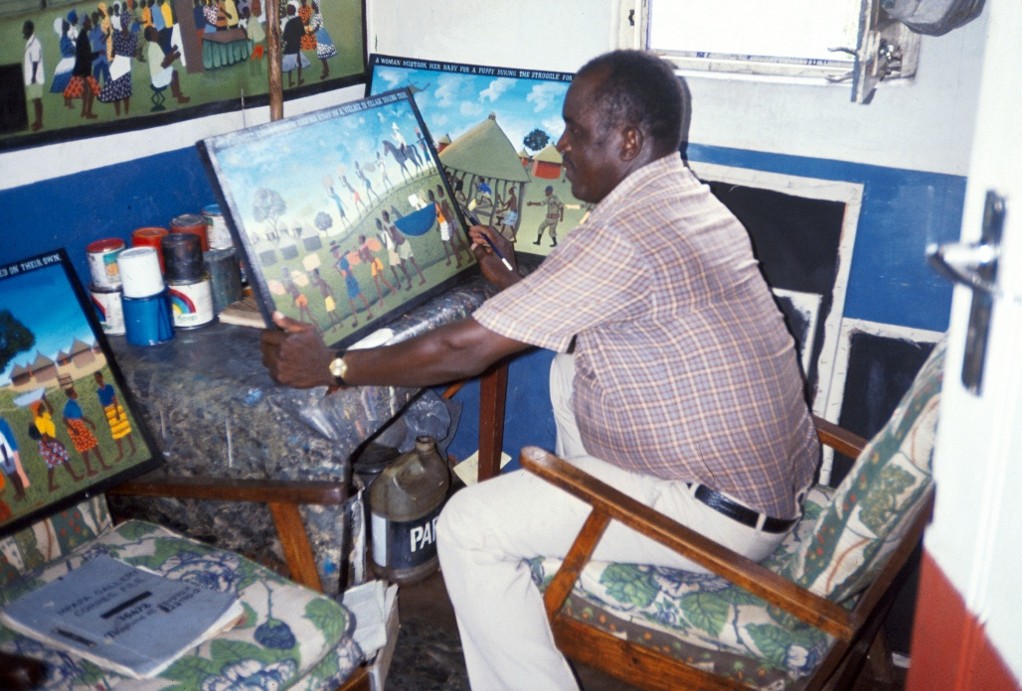
Stephen Kappata in his studio in Mongu, Western Province Zambia
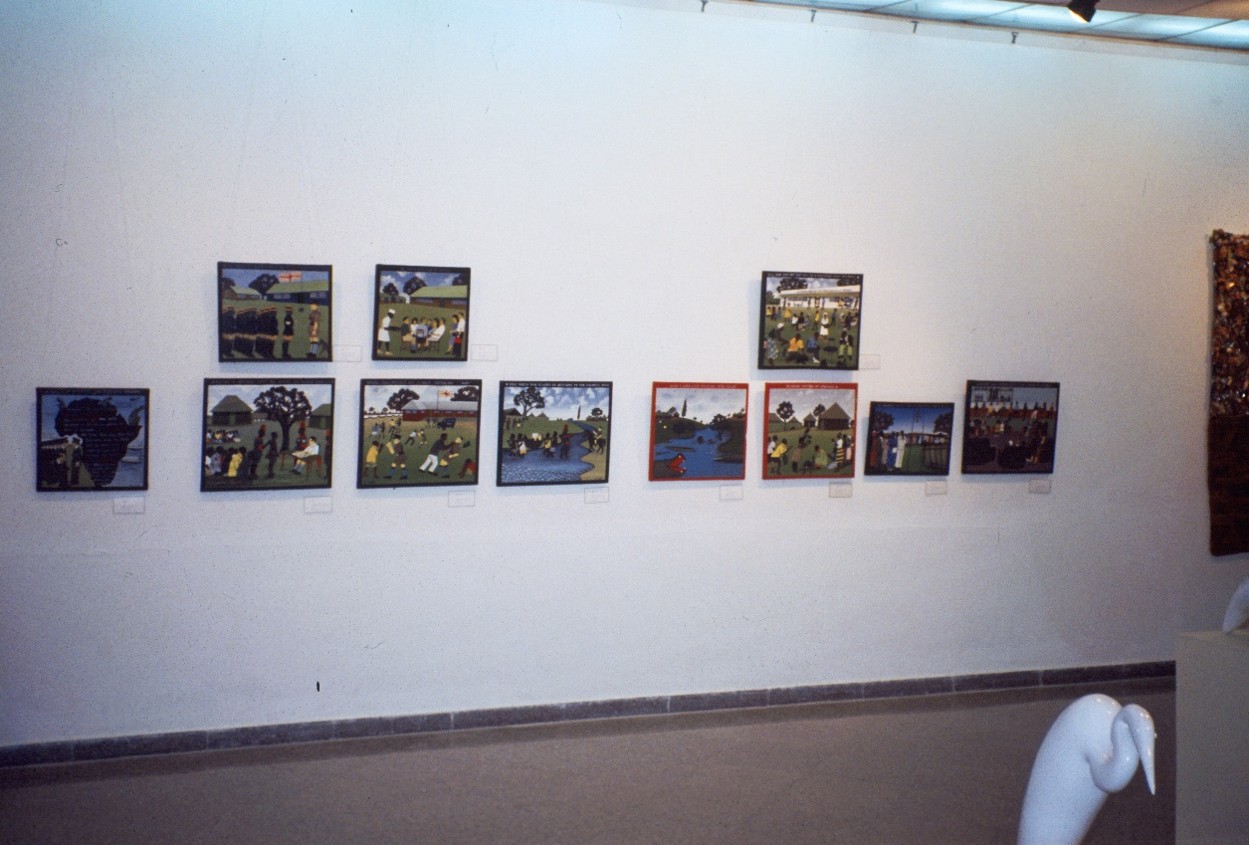
Stephen Kappata’s paintings at the 1989 Havana Biennial
Here is some of the work on exhibition in Havana that Ruth found inspirational.
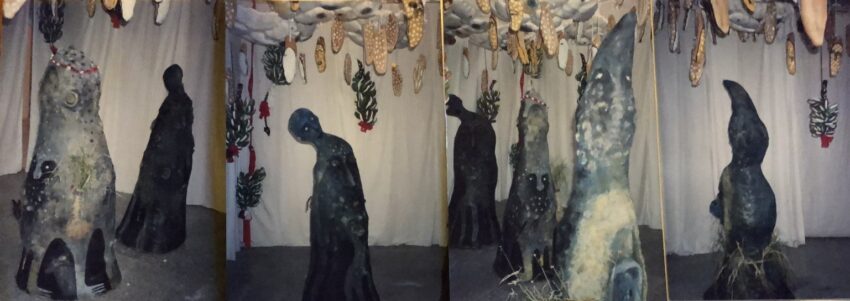
“La Luz” Manuel Mendive’s Performance with painted dancers took place inside this setting
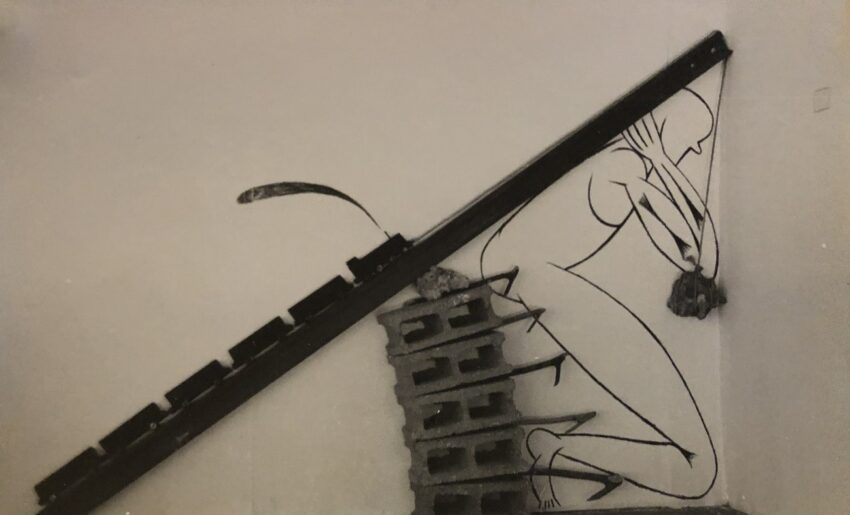
Jose Bedia’s art was drawn directly on the walls of the Havana Castle. It was difficult to photograph in the cramped spaces. Bedia’s subject was based on his time in the Cuban Army in Angola fighting apartheid
Mbile Triangle International Artists Workshops 1993 and 1994
Ruth valued the opportunity to develop her art at the Triangle International Mbile Workshops in 1993 and 1994. As Simon Njavi says in “Africa Remix”. “The Triangle Network is organised as a network of artists, visual art organisations, and artists-led workshops. It currently is active in over 30 countries. Each centre within the Network is independent and set up to respond to local needs. The object of the workshops is “to counterbalance the tendency of the Western art world to put the emphasis on the object and its marketing rather than on the creative process itself”
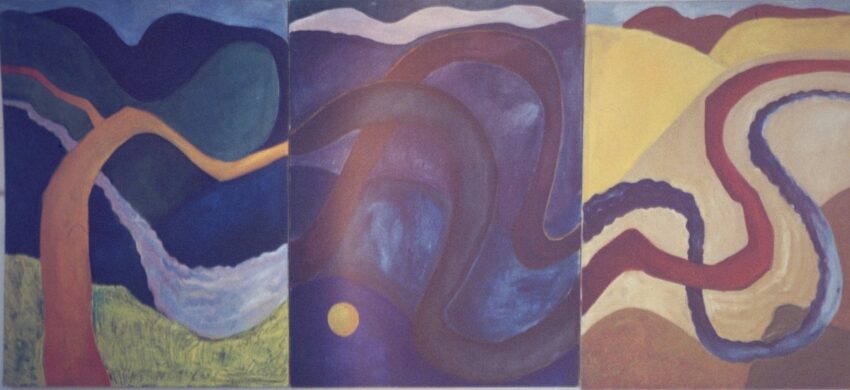
Ruth Hartley. River and Road Journeys. Acrylic on Canvas Mbile Workshop 1993 Old School Exhibition, Lusaka
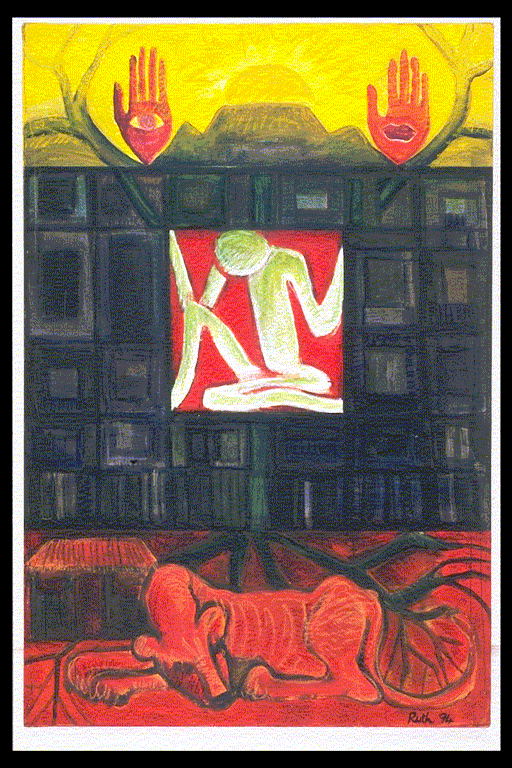
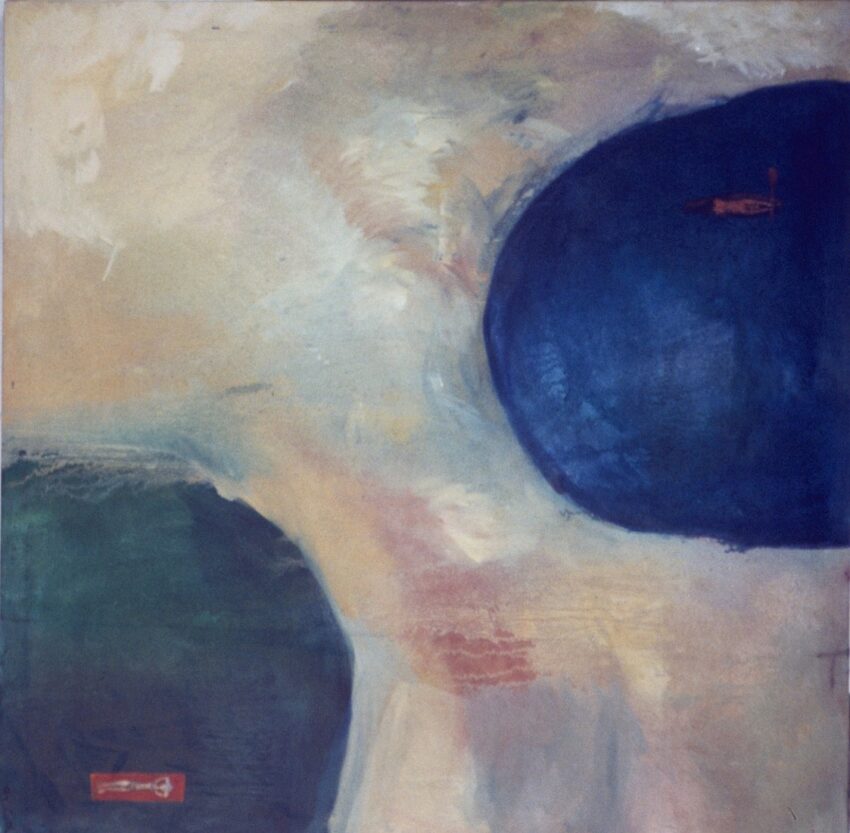
Ruth Hartley Kariba Lake 1993 Mbile Exhibition Old School Lusaka
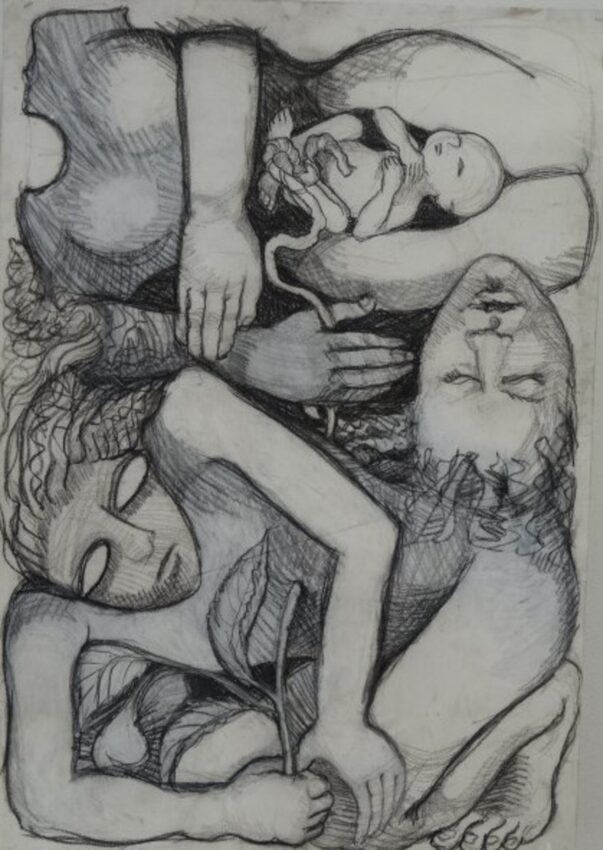
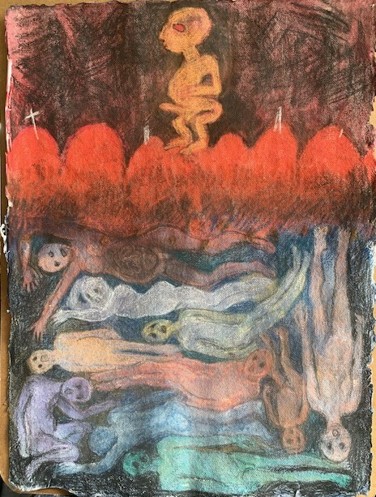
Untitled charcoal drawing
Return to Cambridge
Returning to England and leaving Zambia behind was another painful rupture in Ruth’s life. It allowed her however, to get a studio at Cambridge Artworks, to join Issam Kourbaj’s workshops and to focus on her own art. The Digital age had just begun, and the creative world was changing dramatically.
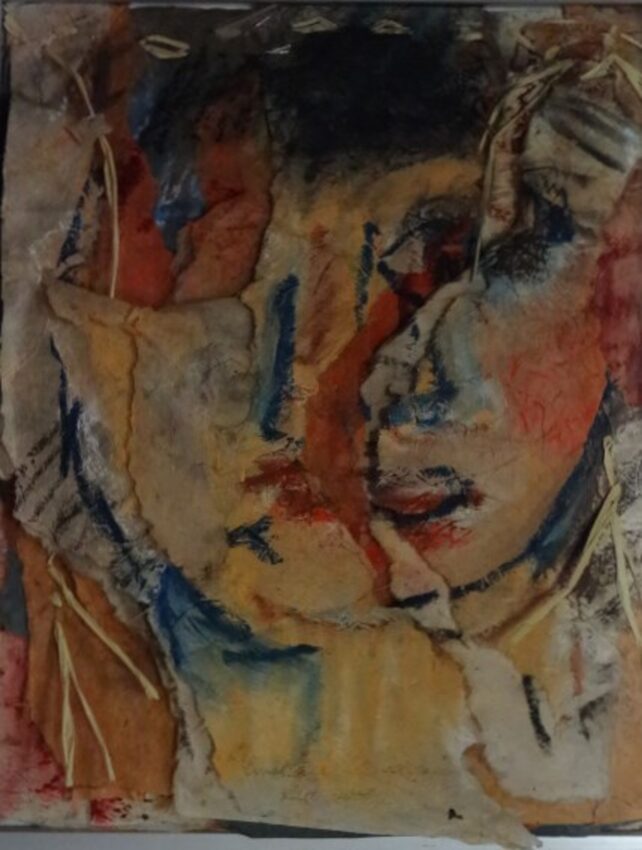
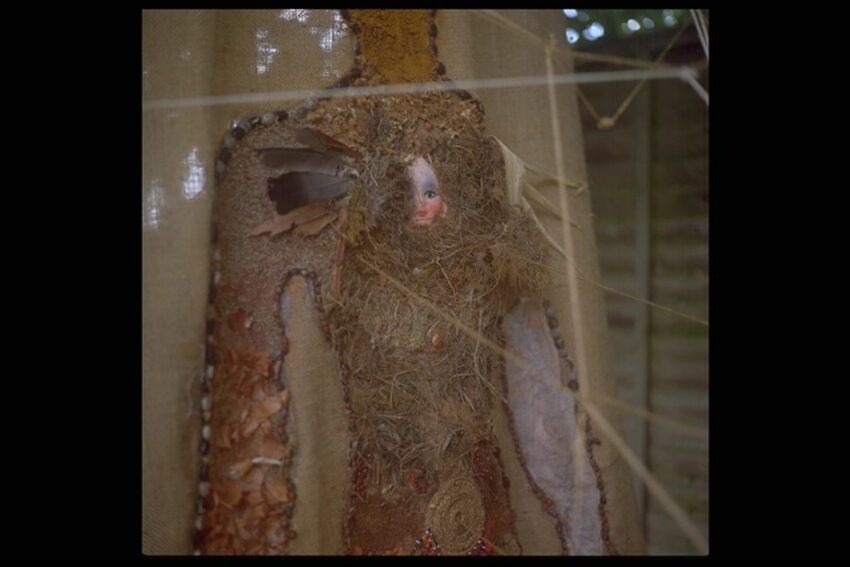
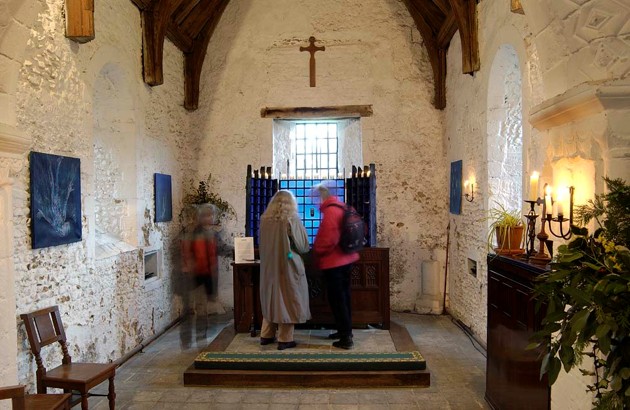
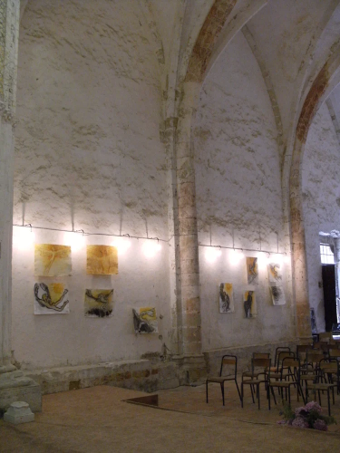
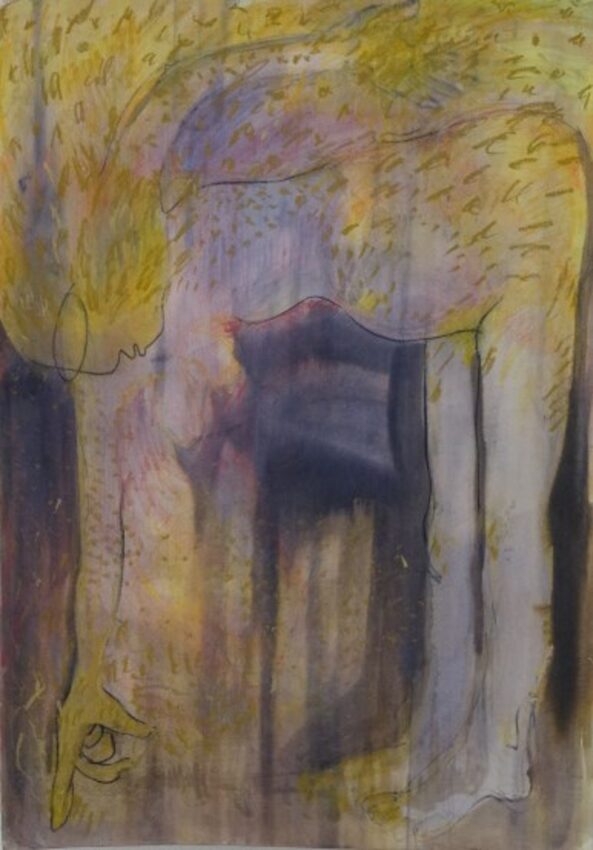
Mixed media drawing The Queen of the Night.
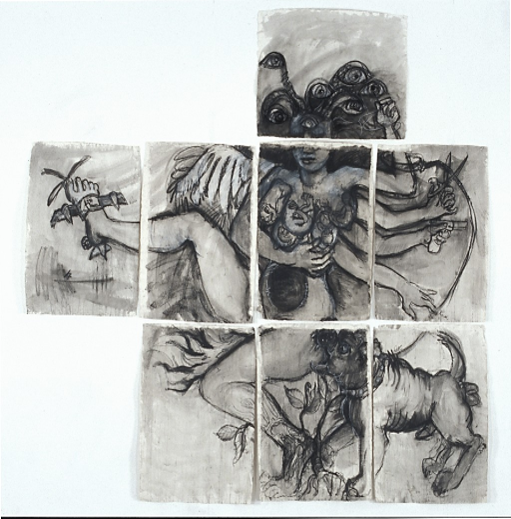
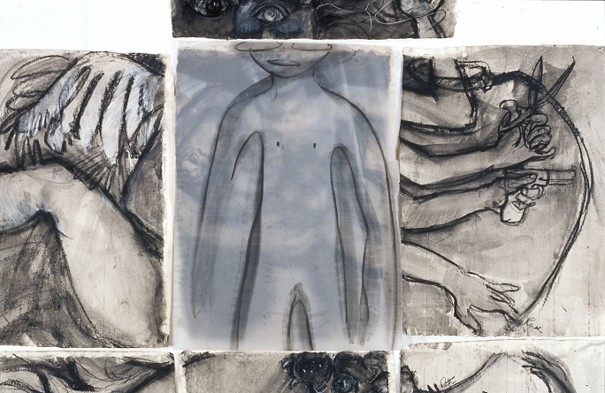
Hamera and Hartley
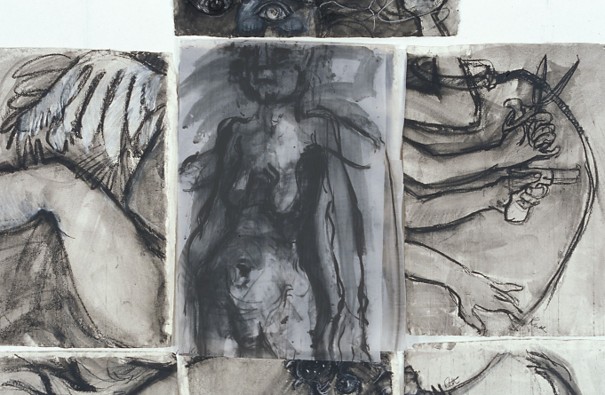
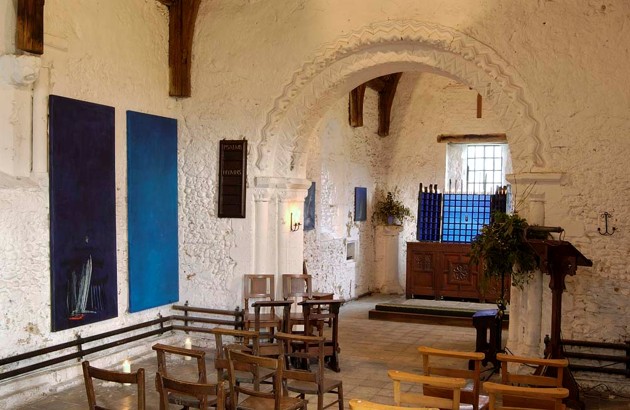
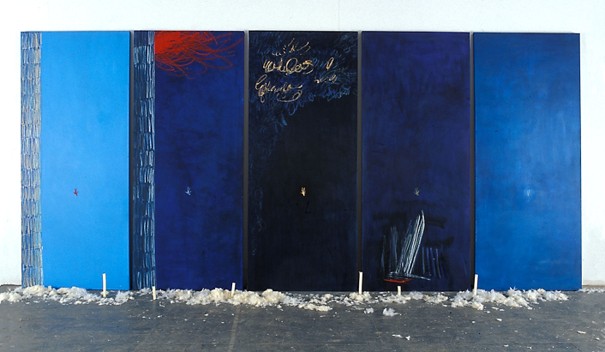
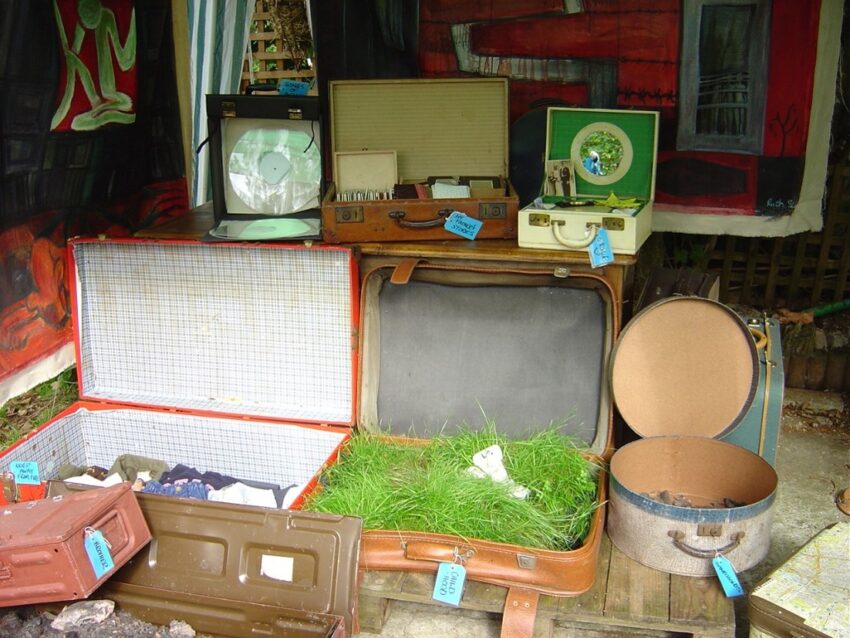
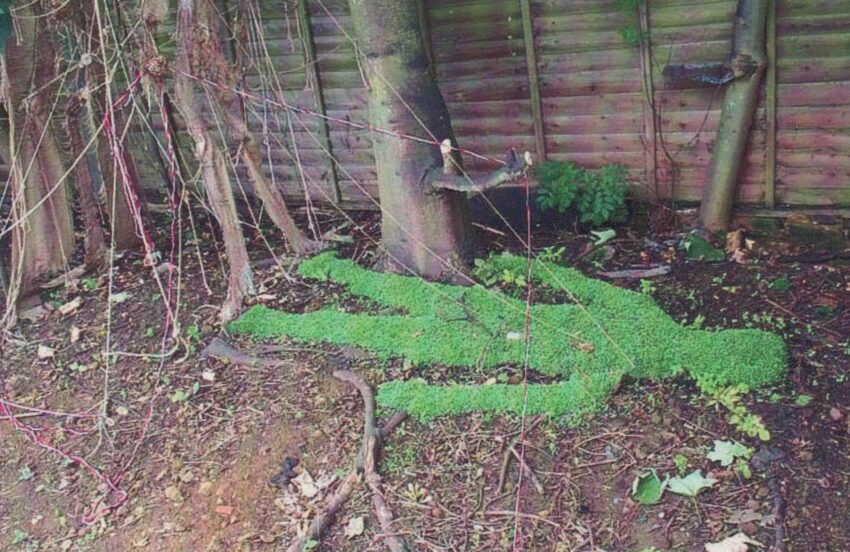
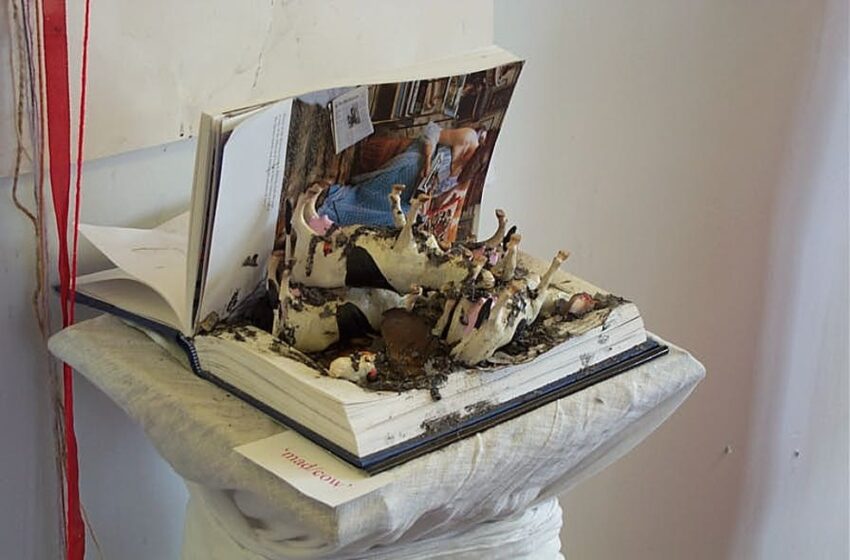
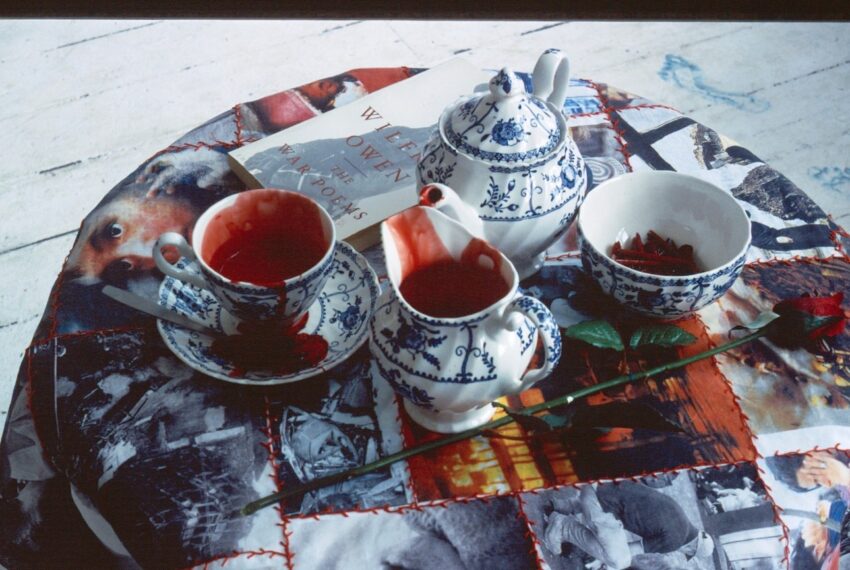
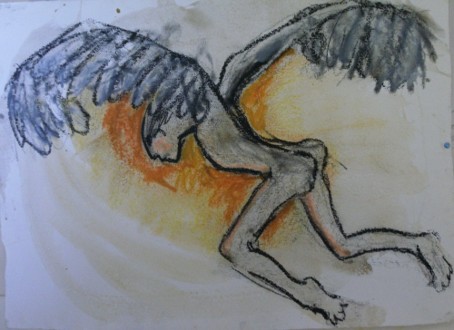
Krystyna Hamera and Ruth became friends at Issam Kourbaj’s C Group. Because of the problems of marketing art and the complexity of their shared ideas, they decided to collaborate in two installations. First, they exhibited m’Other Art, Deconstructing Damien Hirst in St Peter’s, a redundant church next door to Kettle’s Yard Gallery. Then they exhibited Finding Fathers at New Hall College, Cambridge University. m’Other Art was a response to Hirst’s diamond covered skull and the use of dirt, blood and faeces by artists. Finding Fathers was a personal response to war damaged fathers.
Photographer Douglas Atfield documented both exhibitions.
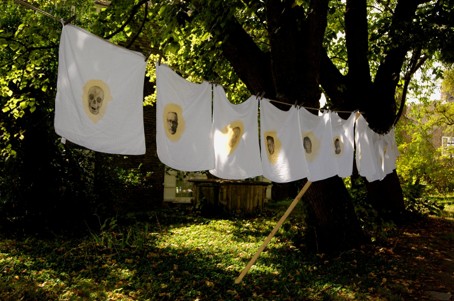
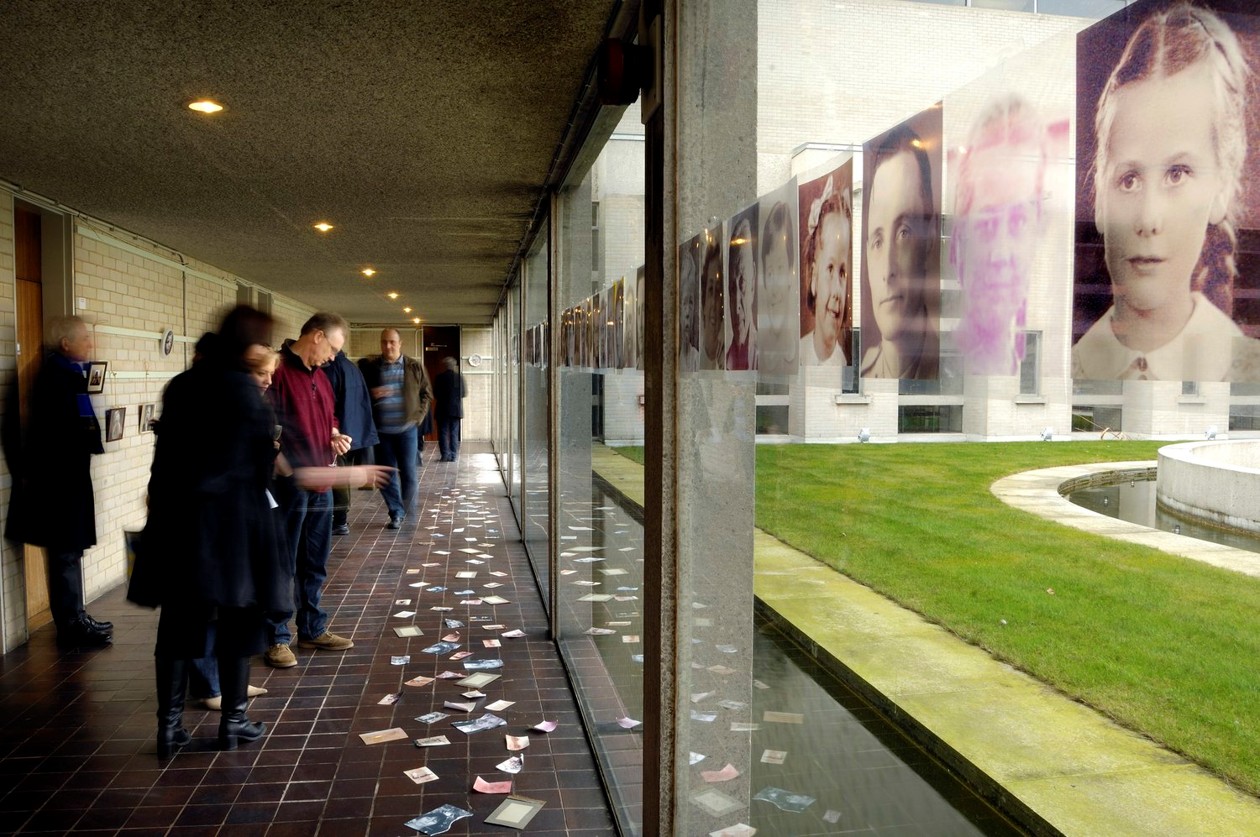
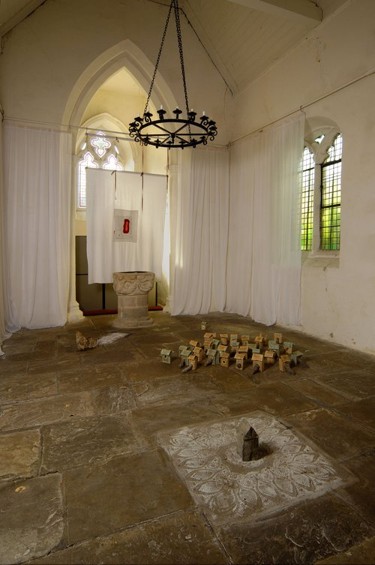
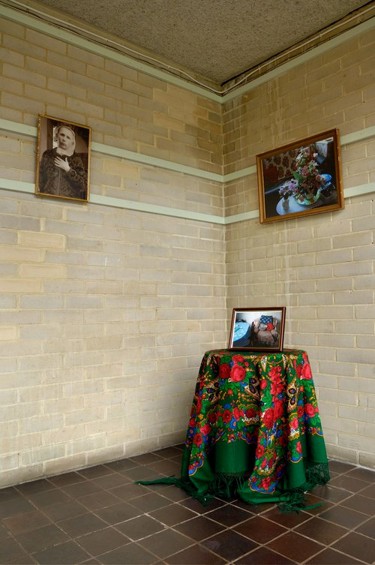
Bedford and POG Studios
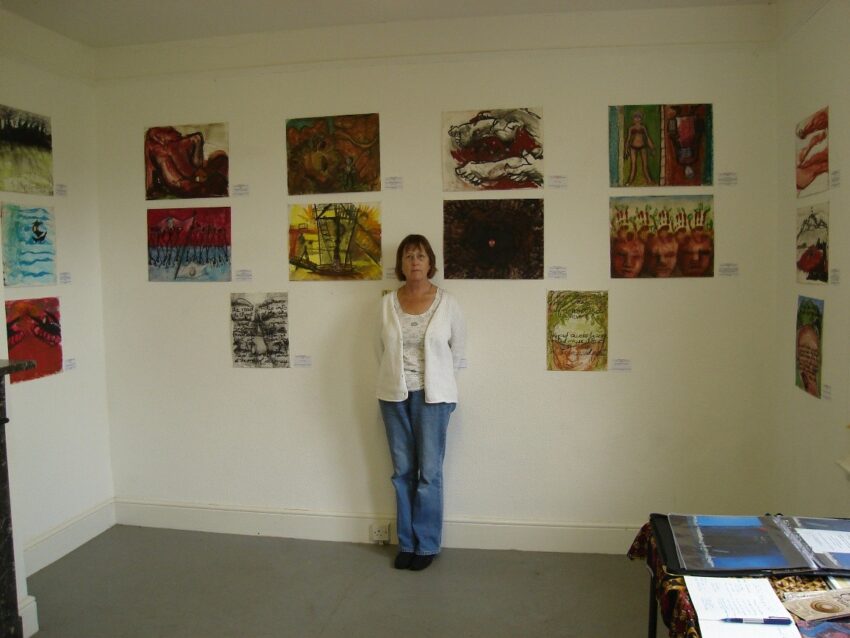
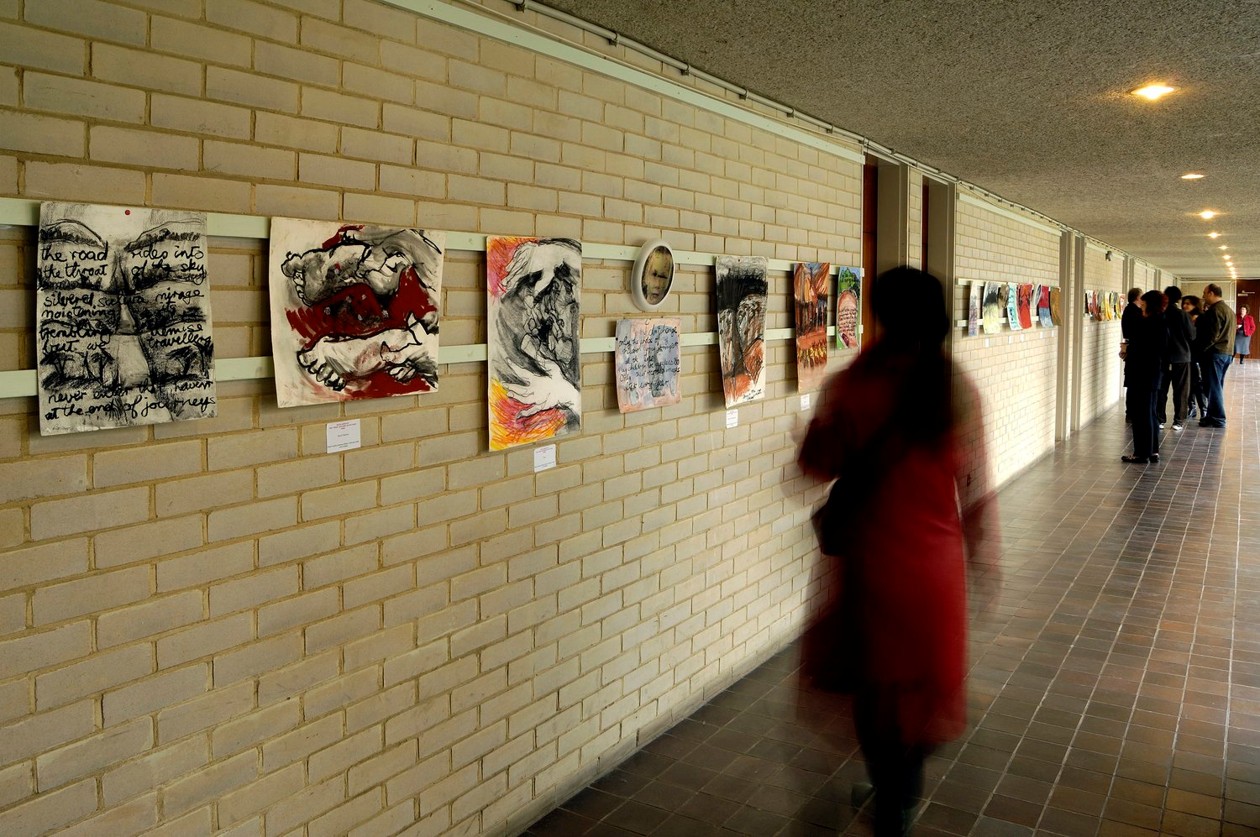
Ruth at her exhibition at Castle Street, Bedford. Drawing of The true History of my Past
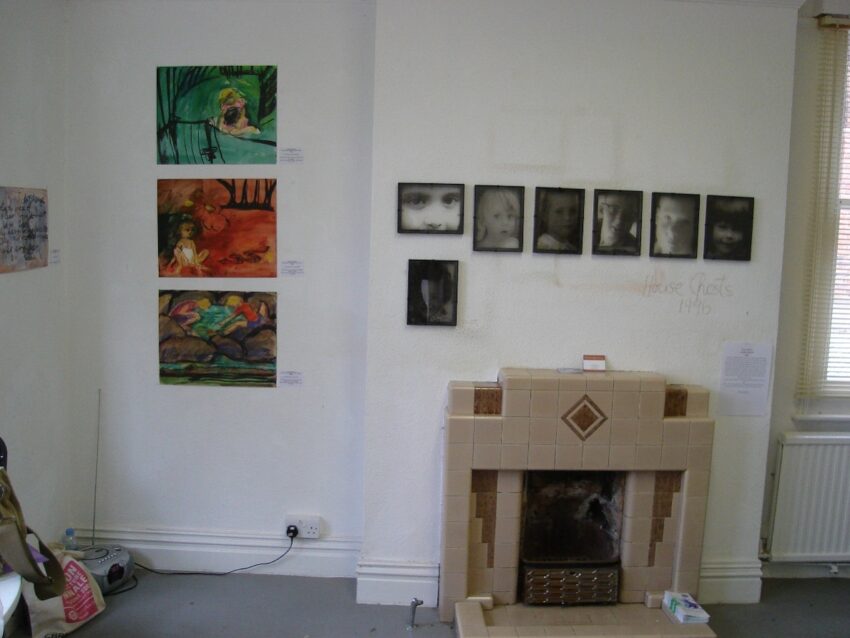
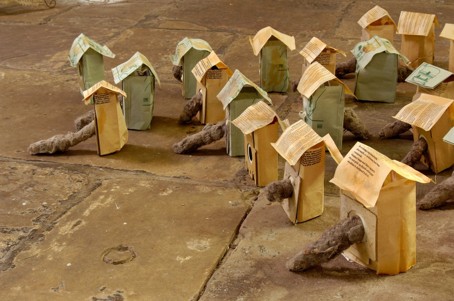
Installation of House Ghosts and The Continents of my Children
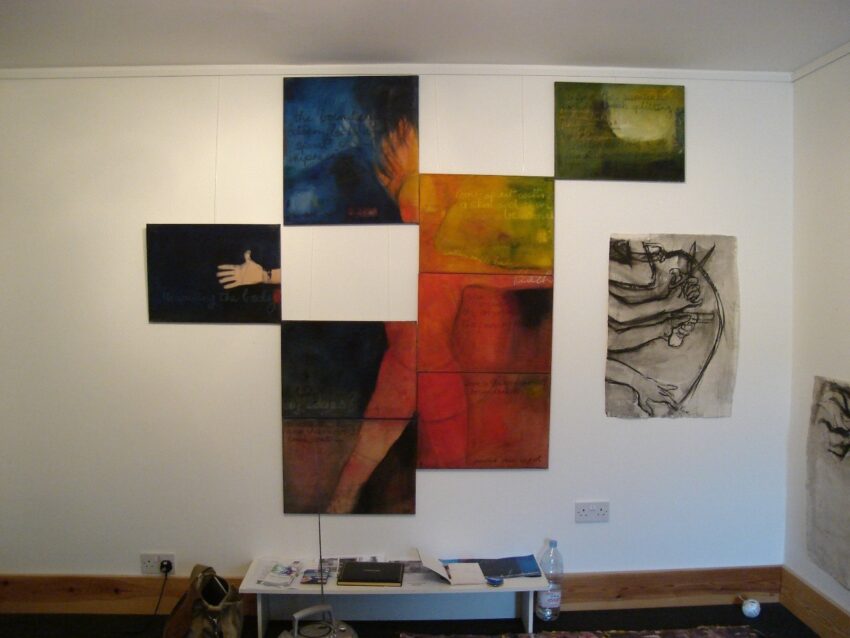
Open Studios Exhibition at POG Studios, The Bull Ring, Bedford.
In 2008 Ruth and John made a looping exploration in a Campervan around the whole of Europe that took in the North Cape at midsummer and Central Turkey in the autumn, finally travelling through Greece and Italy until they reached South-West France in winter. They blogged together about their trip at regular intervals and Ruth continued to write poetry.
CERTAINTY.
My skin just doesn’t fit me anymore
the trouble is, I can’t be sure
if it has stretched or I have shrunk.
Those anti-aging creams are so much junk.
The truth is somewhere in-between
I’m just too old for certainty.
The world just doesn’t fit me anymore
the trouble is, I can’t be sure
if I’ve journeyed lonely and too far
or is the city just outside my door.
The truth is somewhere in-between
I’m just too old for certainty.
The loves I had are there no more,
the trouble is I’m never sure
if I ever loved them quite enough
or if loving me was much too tough.
The truth is somewhere in-between
I’m just too old for certainty.
France
Ruth and John began a new life in South-West France renovating an old cottage in a small village. Ruth continues to write and to make art and John continues to study.
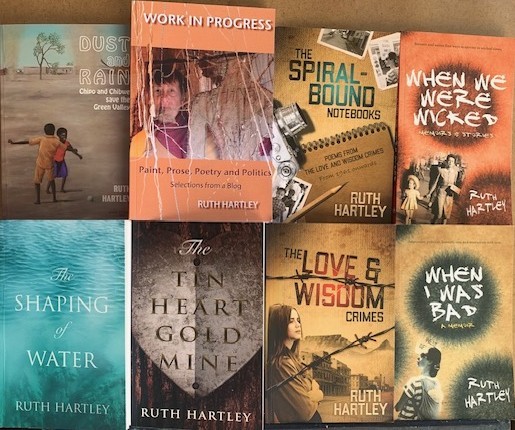
Ruth has written stories and poetry throughout her adult life. In the new digital self-publishing world, she has finally written and published eight books. Dust and Rain, Chipo and Chibwe save the Green Valley, a middle-grade book about climate change was published by Gadsden Publishers in Zambia 27 years after it was first conceived.
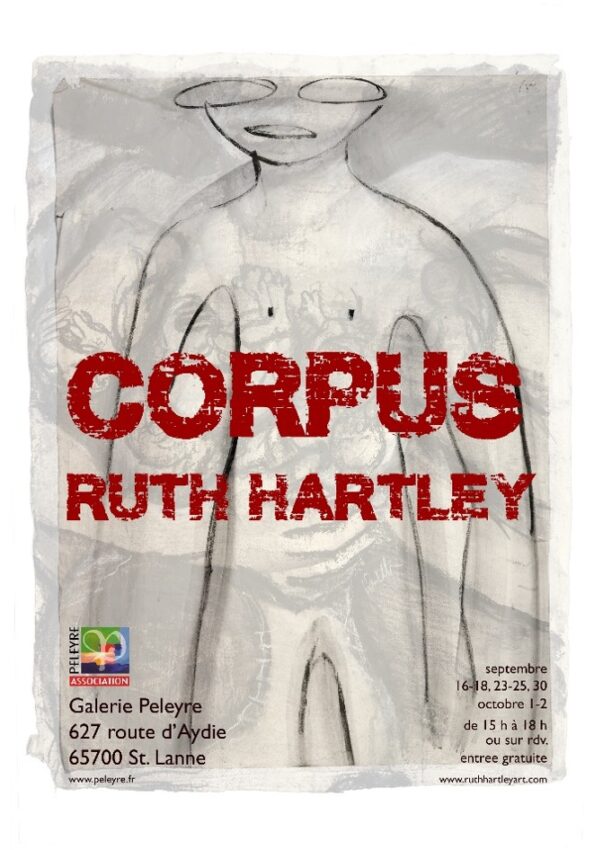
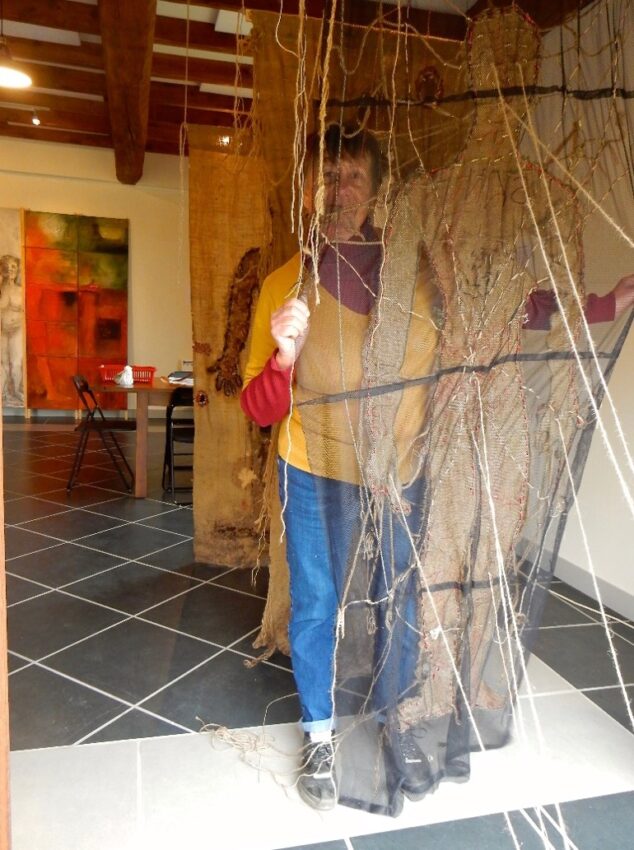
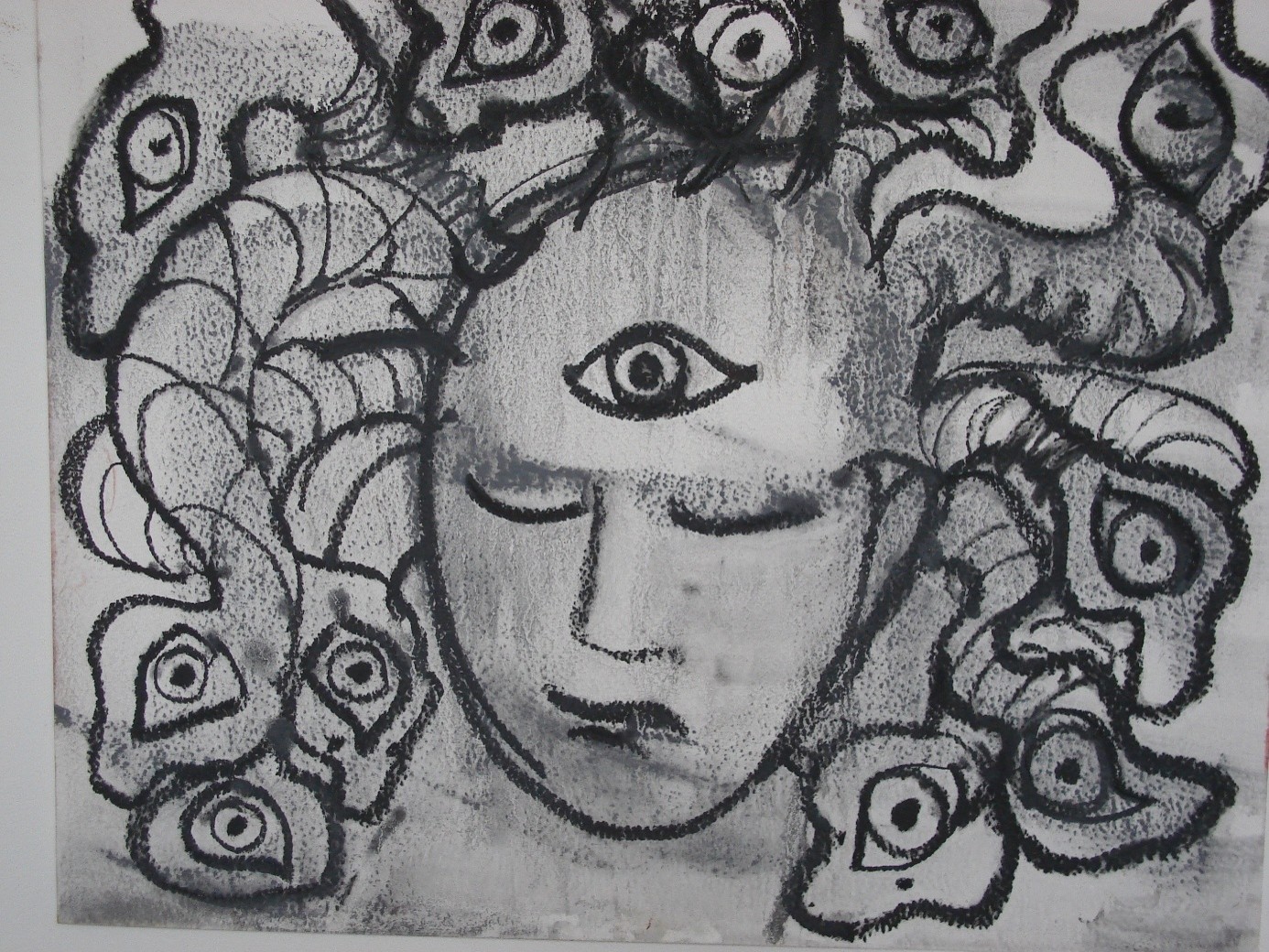
The Third Eye, Searching for a Way
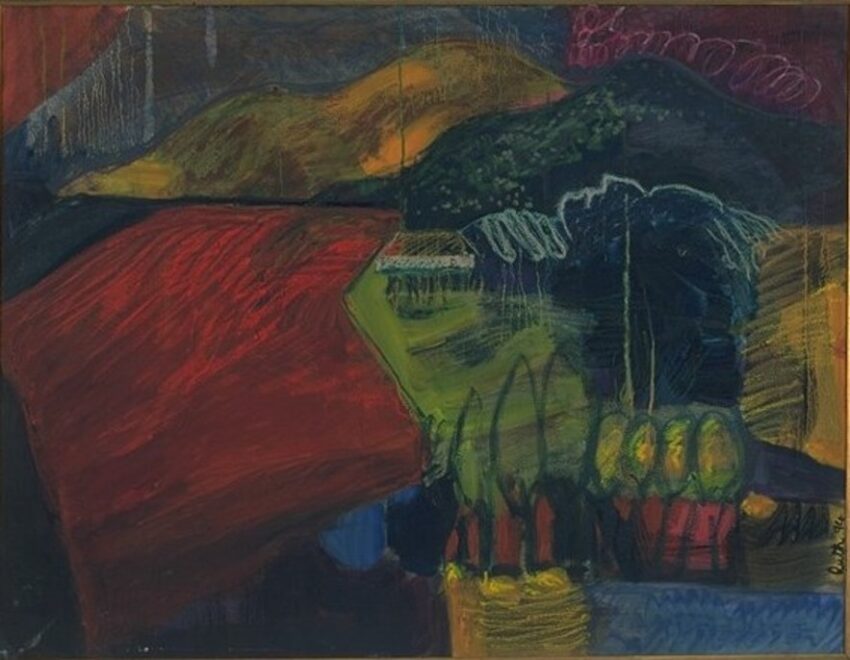
Painting in oil stick and acryllic of the River Adour.
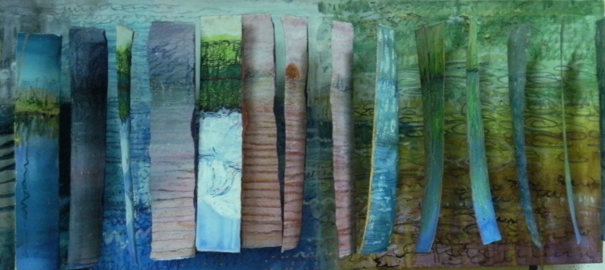
The Adour River with moving papers in front of it.